Last Updated: November 5, 2026
Quick Summary
Skin barrier wipes can help a CGM sensor stay put by giving the adhesive a cleaner, more stable surface and shielding skin from friction and moisture. They are not a cure-all, and results vary, so choose a formulation that fits your main problem, whether irritation or lifting edges.
- Barrier wipes cannot fix a sensor that is poorly placed, applied to damp skin, or worn through heavy sweating.
- Let the film dry fully before applying the sensor, since rushing this step reduces the wipe’s benefit.
- Alcohol-free barrier wipes are usually the better starting point for reactive or irritated skin.
- Rosin-based tackifiers like Skin Tac improve grip but can feel sticky and irritate sensitive skin.
- Patch-test a new wipe on a small area before relying on it for a full sensor session.
Table of Contents
- Why CGM Sensors Lose Adhesion and Irritate Skin
- What Skin Barrier Wipes Do and Where They Fall Short
- Skin Tac Wipes Compared With Other Barrier Options
- How to Use Skin Barrier Wipes for CGM Application
- Choosing a CGM Adhesive Wipe for Sensitive Skin
- Removing CGM Adhesive Without Damaging Skin
- Where Libre Shield Fits Into Your Sensor Protection Plan
- Frequently Asked Questions
Why CGM Sensors Lose Adhesion and Irritate Skin
Skin barrier wipes are one of the simplest ways to help a CGM sensor stay put, and they are worth understanding before you buy. A continuous glucose monitor sits on the skin for days at a time, and the adhesive that holds it there can slowly break down skin, lift edges, and cause irritation (ncbi.nlm.nih.gov). Clinical review of skin and adhesive issues with continuous glucose monitors
Sensors lose adhesion for several reasons. Sweat, oils, lotions, and movement all work against the adhesive, and the skin itself can be a problem. Repeated application over the same area can leave the skin tender, which makes the next sensor harder to hold.
Skin reactions to adhesives are a real concern for many users. A broader review of skin integrity in people using chronic diabetes devices also notes that adhesive-related irritation is a common issue. Review on preserving skin integrity with chronic device use in diabetes
What Skin Barrier Wipes Do and Where They Fall Short
Skin barrier wipes are pre-application wipes that leave a thin protective film on the skin. The film is meant to give the sensor adhesive a cleaner, more stable surface to bond to, and to shield the skin from some of the friction and moisture that cause irritation.
They are not a cure-all. A wipe can help adhesion, but it cannot fix a sensor that is poorly placed, applied to damp skin, or worn through heavy sweating. The film also takes a short time to dry, and rushing that step can reduce its benefit.
Be realistic about the evidence. Most of the material on barrier wipes comes from product descriptions and general skin-care guidance rather than large controlled trials, so results will vary from person to person.
Skin Tac Wipes Compared With Other Barrier Options
Most barrier wipes sold for CGM and pump users fall into a few formulation families, and knowing which family a product belongs to tells you more than the brand name does. The table below compares the options most often mentioned in diabetes device communities and care guidance on the criteria that actually affect sensor wear: base ingredient, film behavior, drying time, and best-fit use case.
| Option | Formulation family | What it leaves on skin | Typical dry time | Best for |
|---|---|---|---|---|
| Skin Tac Adhesive Barrier Wipe | Rosin-based tackifier in an alcohol carrier | A tacky film that boosts grip | 30-60 seconds | Users whose main problem is edges lifting early |
| Skin Glu Adhesive Barrier Wipe | Water-based barrier film | A thin, less tacky protective layer | 60-90 seconds | Users who want adhesion help with less stickiness |
| Kendall Skin Barrier Wipes | Dimethicone or petrolatum-based barrier | A moisture-repellent film | 60 seconds or more | Users fighting irritation and moisture under the patch |
| Smith & Nephew Skin-Prep | Alcohol-based protective film wipe | A clear, dry protective coating | About 30 seconds | Protective routines around sensors and pumps |
| Alcohol-free sensitive-skin barrier wipes | Water-based, no alcohol | A light protective film with minimal sting | 60-90 seconds | Easily irritated or reactive skin |
A few practical distinctions matter more than the label:
- Tackifiers versus barriers. Rosin-based wipes such as Skin Tac are designed to increase grip, which helps adhesion but can feel sticky and may irritate sensitive skin. Dimethicone and petrolatum barriers are designed to repel moisture and reduce friction, which helps irritation but can soften some adhesives if applied too heavily.
- Alcohol content. Alcohol speeds drying and improves spread but stings broken skin and dries the surface. Alcohol-free wipes take longer to dry but are usually the better starting point for reactive skin.
- Carrier versus active ingredient. The carrier determines dry time and feel; the active ingredient determines whether the wipe is primarily a tackifier or a barrier. Two wipes with similar names can sit in different families.
Pricing for these products depends on the seller, pack size, and quantity, so check each seller directly for current prices.
Watch out: some guidance notes that a barrier product can increase moisture on the skin and may affect how well the sensor adheres, so sensitive-skin users should patch-test a new wipe on a small area before relying on it for a full sensor session.
How to Use Skin Barrier Wipes for CGM Application
Good preparation matters more than the wipe itself. Follow these steps for each new sensor:
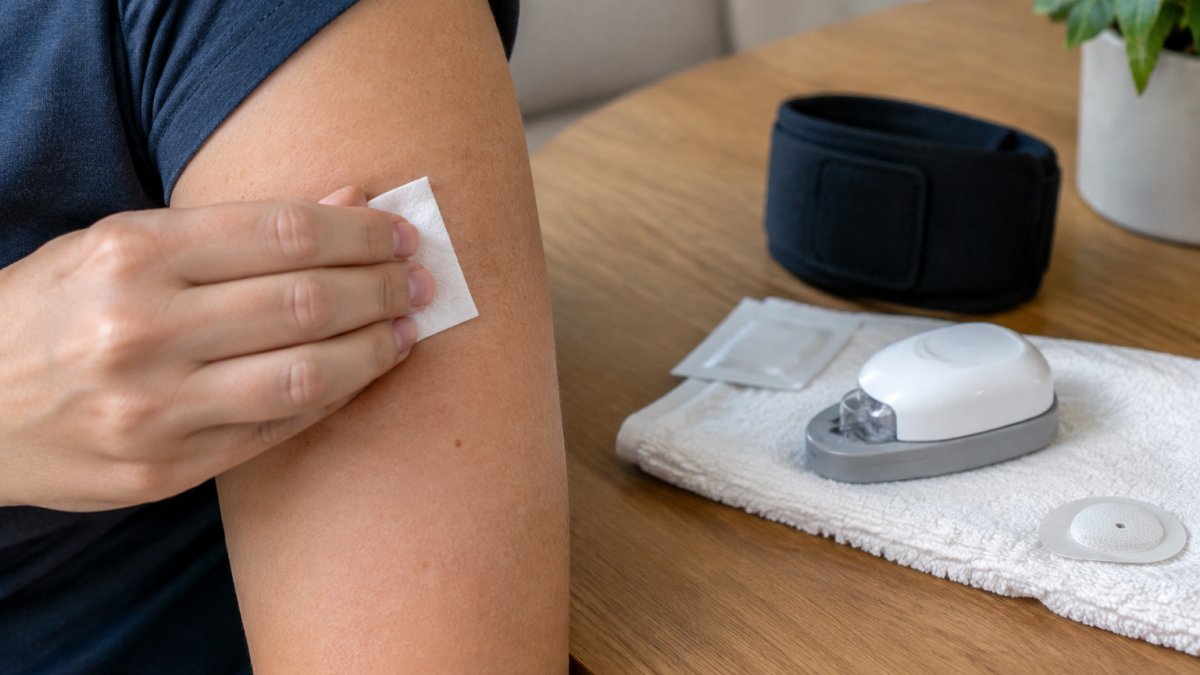
- Wash the application site with mild soap and water, then dry it completely.
- Wipe the area with the barrier wipe, covering a patch slightly larger than the sensor.
- Let the film dry fully before placing the sensor. Drying time varies by product, so follow the package directions.
- Apply the sensor without touching the adhesive or the prepared skin.
- Press firmly around the edges for several seconds.
Watch out: applying a sensor over a wet or freshly wiped area that has not dried can cause the adhesive to slide or fail early.
If the sensor still lifts, check whether the skin was dry, whether the site was oily from lotion, and whether the sensor was placed over a bony area or a fold.
Choosing a CGM Adhesive Wipe for Sensitive Skin
Start with the problem you are actually trying to solve, because the right wipe depends on whether your issue is irritation, adhesion, or both. Use this decision path:
- Redness, itching, or burning under the patch: choose an alcohol-free, dimethicone or petrolatum-based barrier wipe. These leave a moisture-repellent film that reduces friction and keeps adhesive residue from sitting directly on skin. Avoid rosin-based tackifiers, which can worsen reactions in people with adhesive sensitivity.
- Edges lifting early, especially in heat or sweat: choose a rosin-based tackifier wipe such as Skin Tac, applied thinly and allowed to dry fully. A tackifier improves grip but is not a barrier, so pair it with a barrier wipe only if your skin tolerates both.
- Both irritation and poor adhesion: apply a light barrier film first, let it dry completely, then apply the sensor. Do not layer a tackifier over a wet barrier film, because the two can interact and leave a slippery surface.
- Very reactive or allergy-prone skin: patch-test any new wipe on the inner forearm for 24 hours before using it under a sensor, and ask your diabetes care team whether a specific adhesive or barrier product is appropriate.
Application details that change outcomes:
- Clean the site with mild soap and water and dry it fully. Residual lotion or oil defeats most barrier films.
- Apply the wipe to a patch slightly larger than the sensor footprint, then let it dry for the full time on the package. Most films need 30-90 seconds; rushing this step is the most common cause of early failure.
- Keep the wipe and the film out of the sensor insertion area. Barrier products belong on the skin around the insertion point, not over it, and you should check the device manufacturer’s instructions for any compatibility warning before applying anything under the sensor.
- Press the sensor edges firmly for several seconds after application.
Watch out: if irritation persists, spreads, or appears with swelling or blistering, stop using the product and seek medical advice rather than layering more barrier products on the site.
Our research did not include head-to-head trial results comparing these wipes for sensitive skin, so treat manufacturer claims as starting points. A common pattern among long-term CGM users is to keep one barrier wipe for daily use and one adhesive remover for sensor changes, rather than relying on a single product for both jobs.
Removing CGM Adhesive Without Damaging Skin
Removing a sensor can cause as much irritation as applying one. Peel slowly and in the direction of hair growth, and use adhesive remover on any residue that remains. Avoid scrubbing, which can strip skin and make the next application harder.
If residue builds up over time, a gentle adhesive remover is usually better than harsh solvents. Wash the area after removal and let it rest before the next sensor goes on.
Where Libre Shield Fits Into Your Sensor Protection Plan
Barrier wipes address the skin, but many users also lose sensors to snags, sweat, and impact during daily activity. Libre Shield makes sensor saver armbands designed to keep a sensor secure during daily activities. Our armbands are made for FreeStyle Libre and Dexcom sensors, so you can add physical protection on top of a good skin-prep routine. For a Dexcom G7 user, the Libre Shield G7 armband is built for that sensor, while FreeStyle Libre 2 armband protection and Libre 3 armband options cover the other common models.
If you are deciding how to spend your budget, compare the cost of a protective armband with the cost of replacing sensors that come off early. For current pricing and availability, visit the Libre Shield website or contact us for a quote.
For a broader look at keeping sensors on, read our guide to stopping CGM sensor peeling, and see our roundup of protective gear for Libre sensors.
Frequently Asked Questions
Are skin prep and skin barrier wipes the same thing?
Not exactly. Skin prep wipes are usually alcohol-based and clean the skin and remove oils before a sensor goes on. Skin barrier wipes typically leave a thin protective film that shields the skin from adhesive irritation and can help the sensor adhere. Some products combine both functions, so check the ingredient list and the manufacturer’s directions for the specific product. Many people use a prep wipe first and a barrier product second, but that is a routine choice rather than a rule. Confirm with your diabetes care team if your skin is especially sensitive.
What is the difference between Skin Tac and skin barrier wipes?
Skin Tac is a brand of skin barrier product, so the two are related rather than separate categories. Skin barrier wipes are the broader product type, which includes several brands and formulations. Whether one suits you better depends on your skin sensitivity, sensor type and how long you need the sensor to stay on. Check current pricing and pack sizes with the seller.
Can CGM cause skin irritation?
Yes. Adhesive can cause skin irritation in some users. Irritation tends to be more common with repeated wear on the same area and with sensitive skin. Protective steps such as barrier wipes, transparent dressings and rotating sensor sites are commonly discussed options. If irritation persists, blisters, or spreads, contact your healthcare provider rather than changing products on your own.
How do you remove CGM adhesive without irritating your skin?
Avoid pulling the adhesive off quickly. Instead, slowly peel back the edge while pressing the skin flat with your other hand. A dedicated adhesive remover or a wipe designed for this purpose can loosen the bond and reduce pulling on the skin. Let the remover sit briefly before lifting, and rinse or dry the area gently afterward. Stop if the skin stings or breaks, and let it recover before applying a new sensor to the same spot.
Skin barrier wipes can help a sensor stay attached and protect sensitive skin when used correctly. Pair a good prep routine with secure protection for the best chance of a sensor that lasts its full wear time.
