Table of Contents
- What Counts as Protective Gear for Libre Sensors?
- Libre Sensor Adhesive Patches: Pros, Cons, and Limits
- CGM Sensor Armbands: How They Compare to Patches
- How to Stop Libre Sensor from Peeling: Step-by-Step
- Matching Protective Gear to Your Activity Level
- What to Check Before You Buy Protective Gear
- Conclusion: Choosing the Best Protective Gear for Libre Sensors
- Frequently Asked Questions
Last Updated: September 13, 2026
What Counts as Protective Gear for Libre Sensors?
Protective gear for Libre sensors is any accessory designed to keep a continuous glucose monitor firmly attached to your skin while shielding it from impact, moisture, and friction. The category covers two main products: adhesive patches that sit over the sensor, and armbands that wrap around the limb. At Libre Shield, we build the armband side of that category.
FreeStyle Libre sensors are small, light, and surprisingly fragile at the edges. The adhesive holds well on a calm day at a desk. Add sweat, a swimming pool, a barbell, or a five-year-old at recess, and the failure points show up fast. A loose sensor does not just look untidy; it can shift, catch on clothing, and come off entirely before its wear window is up. That means a replacement, a new insertion, and another round of expense.
The FDA guidance on continuous glucose monitoring systems classifies these devices as prescription technology, which is worth remembering: anything you put over or around a sensor should secure it without interfering with how it reads. Protective gear that presses too hard, traps moisture, or covers the sensor’s communication path creates a new problem while solving the old one.
Most people searching for the best protective gear for libre sensors want one thing: a sensor that stays on until they decide to remove it. The gear that achieves that is the gear matched to your activity, not the gear with the loudest marketing.
Libre Sensor Adhesive Patches: Pros, Cons, and Limits
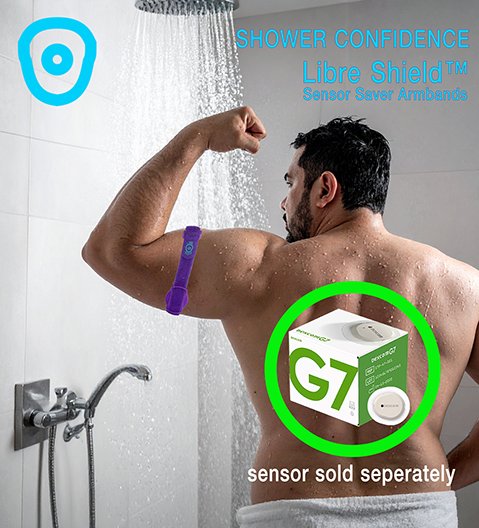
Adhesive patches are the simplest option. They are thin, flexible covers that stick over the sensor and its surrounding skin, holding the whole assembly down. Libre sensor adhesive patches work well for people whose main enemy is light friction, such as clothing rubbing against the arm or a seatbelt dragging across the sensor.
Where patches fall short is sweat and water. A patch that survives a normal day can lift at the edges after a hard training session or a long shower (pubmed.ncbi.nlm.nih.gov). Once one corner curls, the rest follows. People with sensitive skin also report irritation from repeated adhesive contact, especially when they are already reacting to the sensor’s own glue.
- Best for: desk work, light activity, short wear windows
- Weak point: moisture and heavy sweat
- Watch for: edge lifting, adhesive irritation, residue on removal
A common mistake is stacking patches to fix a peeling one. Layering adhesive on top of adhesive traps moisture against the skin and rarely holds longer than the first patch did.
CGM Sensor Armbands: How They Compare to Patches
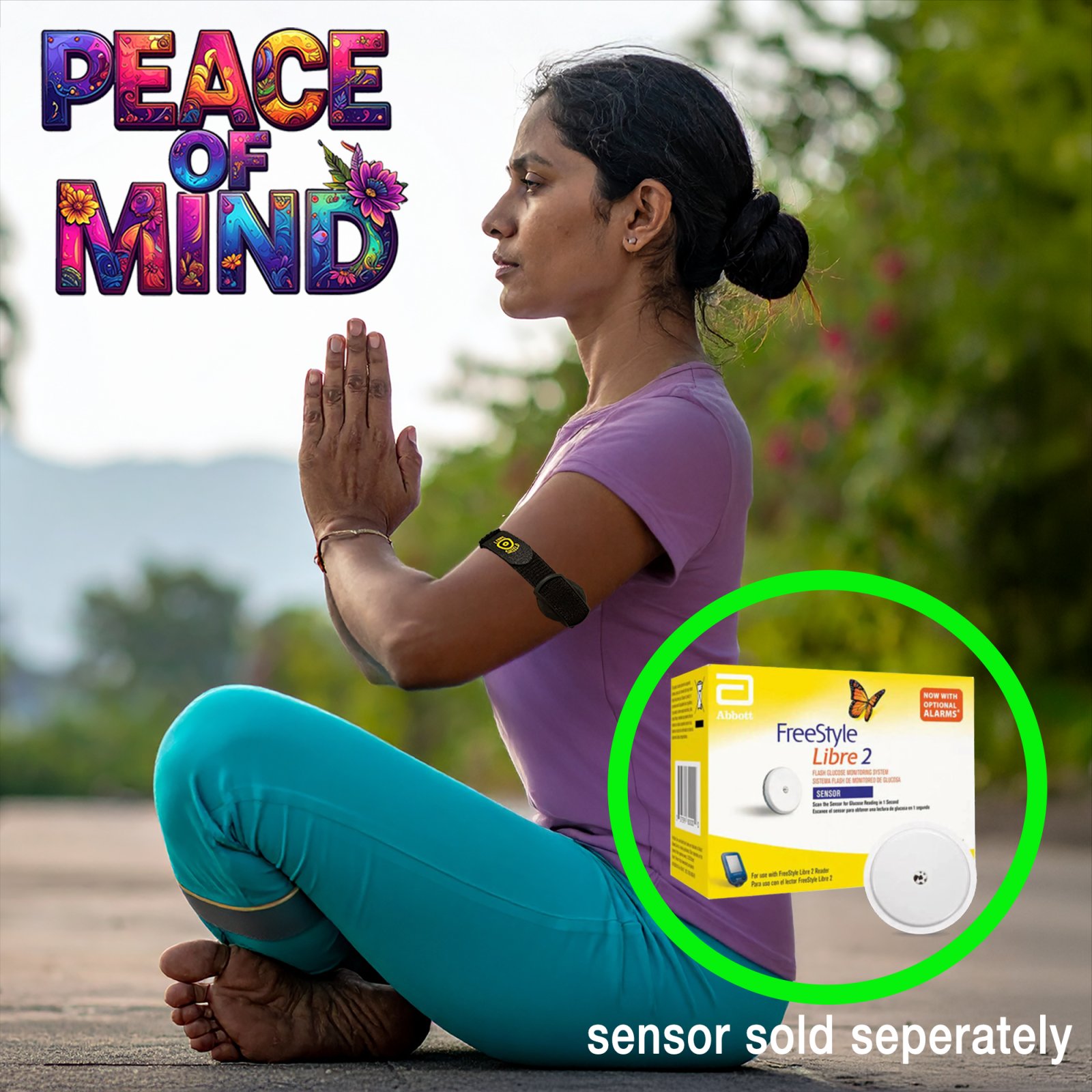
CGM sensor armbands are fabric or elastic bands that wrap around the upper arm and hold the sensor in place mechanically rather than chemically. Instead of relying on adhesive alone, an armband applies steady, even pressure across the sensor site, which is why it holds up where patches give out.
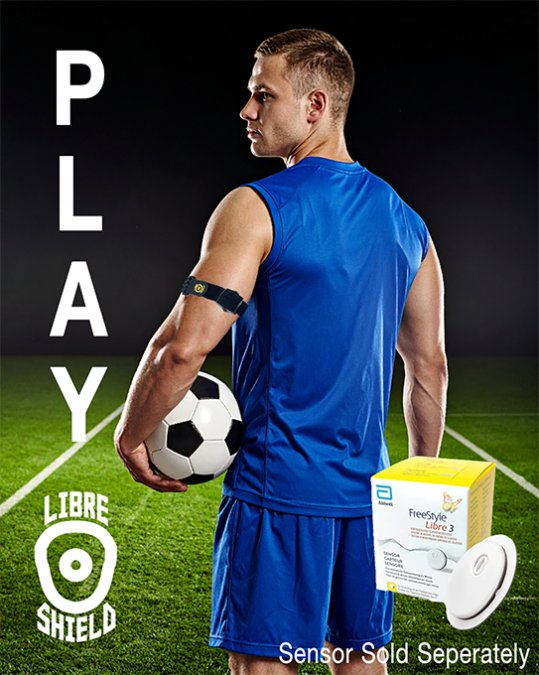
Close-up of an adult’s upper arm wearing a Libre sensor secured with a black Libre Shield Sensor Saver 3 Armband , while the person holds a football after a game on the field.
The comparison comes down to how each one fails. A patch fails when its adhesive gives way, usually at the edges and usually because of moisture. An armband fails only if it shifts, which is a fit problem you can solve before you ever put it on. For swimming, hot tubs, showers, and high-sweat training, that difference matters more than any other feature.
|
Feature |
Adhesive Patches |
CGM Sensor Armbands |
|---|---|---|
|
Hold method |
Adhesive bond |
Mechanical pressure |
|
Sweat resistance |
Moderate |
High |
|
Water exposure |
Limited |
Strong |
|
Skin contact |
Full adhesive layer |
Band only, sensor stays clear |
|
Reusable |
No |
Yes, typically |
The one honest limitation of an armband is that it adds a visible layer over the sensor. Some users want the lowest-profile option possible, and a patch wins on that single point. For everyone else, an armband solves the problem patches keep losing to.
How to Stop Libre Sensor from Peeling: Step-by-Step
Knowing how to stop Libre sensor from peeling starts with preparation, not product. Most premature detachments trace back to skin that was not clean, dry, or oil-free before the sensor went on.
- Wash and dry the site. Use mild soap, rinse fully, and let the skin air-dry for a few minutes. Any residue weakens the bond.
- Skip lotions and oils. Do not apply moisturizer, sunscreen, or body oil near the sensor site before insertion.
- Press the sensor down firmly. Hold steady pressure for several seconds after applying so the adhesive fully contacts the skin.
- Add protection before trouble starts. Fit your patch or armband at insertion time, not after the edges have already lifted.
- Check the edges daily. A quick glance after showers and workouts catches lifting early, when it is still fixable.
- Remove gently. Peel slowly and use adhesive remover wipes if needed to protect the skin underneath.
Matching Protective Gear to Your Activity Level
Gear should match the job. A patch that is fine for a desk job will not survive lap swimming, and an armband is overkill for someone who mostly sits still. Match the product to the demand and you stop replacing sensors early.
- Sedentary or light activity: a standard adhesive patch covers most needs.
- Gym, running, and team sports: an armband holds through sweat and movement.
- Swimming, bathing, hot tubs: an armband is the stronger choice, since adhesive alone struggles with prolonged water exposure.
- Physically demanding jobs: an armband keeps the sensor from shifting when you bump into equipment or surfaces.
- Children at school and play: a snug, correctly sized armband keeps the sensor in place through recess and gym class.
Parents of young children should size carefully. A band that is too loose slides; one that is too tight is uncomfortable and gets removed. Fit matters more than brand loyalty here.
What to Check Before You Buy Protective Gear
Check four things before you commit: fit, material, water resistance, and how the product interacts with your sensor. These decide whether the gear works or becomes another thing you stop using.
- Fit range: Does the band or patch come in a size that matches your arm or your child’s? An ill-fitting band defeats the purpose.
- Material: Look for breathable, skin-friendly fabric if you have sensitive skin. Heavy, non-breathing material traps sweat.
- Water performance: If you swim or use a hot tub, confirm the product is built for repeated water exposure, not just splashes.
- Sensor compatibility: Make sure the design leaves the sensor surface clear so readings stay accurate.
- Reusability: Armbands that can be washed and reused typically cost less over time than disposable patches.
Conclusion: Choosing the Best Protective Gear for Libre Sensors
The best protective gear for libre sensors is the gear that matches your activity and stays put through it. Patches suit light use; armbands hold up to sweat, water, and impact. If you train hard, swim, work with your hands, or manage a child’s sensor, an armband is the more reliable choice.
Frequently Asked Questions
How do I keep my Libre sensor from falling off?
Start with clean, dry skin and apply the sensor firmly. Add a protective layer such as an adhesive patch or a CGM sensor armband. Patches work for light activity, while armbands offer more security for sports, swimming, or physically demanding jobs. Avoid lotions or oils near the site, as they weaken adhesion. If you sweat heavily or swim often, combine a patch with an armband for the best protective gear for Libre sensors.
Are sensor armbands better than adhesive patches?
It depends on your lifestyle. Adhesive patches are low-profile and good for everyday wear, but they can peel at the edges with sweat or friction. CGM sensor armbands hold the sensor in place with a physical strap, so they stay put during high-impact activities, swimming, or construction work. Many users keep both on hand: patches for desk days and armbands for workouts. Neither should interfere with sensor readings when applied correctly.
Can I shower with a protective cover on my Libre sensor?
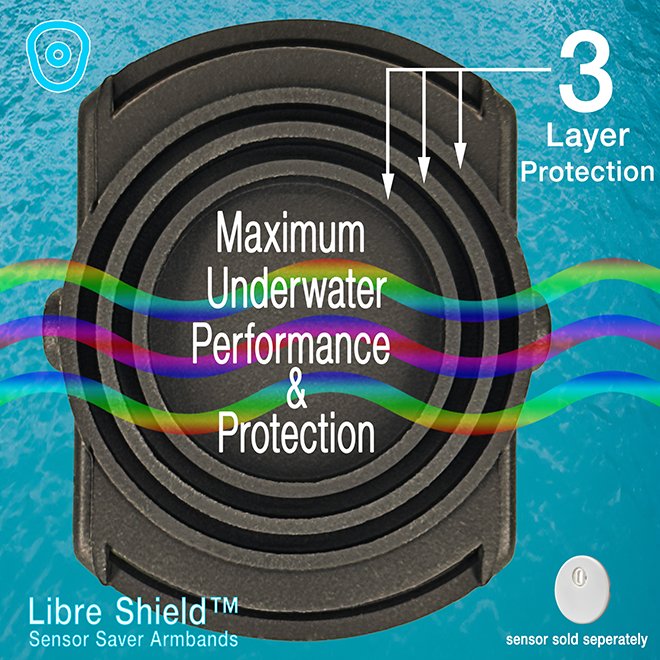
Yes. Most adhesive patches and CGM sensor armbands are designed to handle water exposure, including showers and baths. Make sure the patch or armband is fully dry after showering to maintain adhesion. If you swim or use a hot tub, an armband that covers the sensor provides extra security. Always check the manufacturer’s guidelines for water resistance and replace the cover if it starts to lift. The best rated armband for waterproof protection is the Libre Shield Sensor Saver Armband.
What is the best way to protect a Libre 3 sensor during exercise?
For exercise, a CGM sensor armband is the most reliable option. It holds the sensor against your arm even during running, CrossFit, or contact sports. Apply the armband over a clean, dry sensor and adjust it snugly but not tight enough to restrict circulation. If you also use an adhesive patch underneath, let it set for 10 minutes before exercising. This combination is the best protective gear for Libre sensors during intense workouts.
Replacing sensors early adds up, and the frustration of a sensor that will not stay on is worse than the cost. Libre Shield builds sensor saver armbands designed for exactly this problem, with durable construction, secure fit, and protection that holds through workouts, swimming, and demanding daily activity. Get started with Libre Shield and keep your sensor exactly where it belongs.