Last Updated: November 15, 2026
Quick Summary
Most insurance plans cover the CGM sensor and its core supplies, but coverage for cgm armbands varies by payer and plan and is often not included. Insurers generally treat protective armbands as accessories outside the medical benefit, so confirm coverage with your specific plan before buying.
- Insurers generally pay for devices and supplies that are medically necessary for treating diabetes.
- Medicare covers therapeutic CGMs under Part B after the Part B deductible is met.
- As of July 2026, 48 states and D.C. provide some level of Medicaid coverage for CGMs.
- Ask your plan whether a sensor-protection armband is a covered supply and get the answer in writing.
- If a claim is denied, request the plan’s coverage criteria and build a letter of medical necessity around them.
Table of Contents
- Why Insurance Rarely Covers CGM Armbands
- What Medicare and Medicaid Cover for CGM Users
- Does Insurance Cover CGM Accessories Like Armbands?
- Commercial Plans, Pharmacy Benefits and Out-of-Pocket Costs
- How to Verify Coverage With Your Plan and Provider
- CGM Armband Reimbursement and HSA or FSA Eligibility
- Appealing a Denied Claim for a CGM Accessory
- Step 1: Read the denial letter for the exact reason code
- Step 2: Request the plan’s coverage criteria in writing
- Step 3: Build a letter of medical necessity that maps to the criteria
- Step 4: Submit at the right level and on time
- Step 5: Escalate to external review if the internal appeal fails
- Step 6: Keep a paper trail that survives a second denial
- Next Step: Protecting Your Sensor Without Relying on Insurance
- Frequently Asked Questions
Why Insurance Rarely Covers CGM Armbands
Most people asking whether CGM armbands are covered by insurance want a yes or no.
Access to CGMs is itself uneven. A 2020 study published in the Journal of Diabetes Science and Technology found that 39.5% of respondents named lack of insurance coverage as their primary reason for not trying a CGM (2020 study on CGM coverage eligibility in the Journal of Diabetes Science and Technology).
Insurers generally pay for devices and supplies that are medically necessary for treating diabetes.
- Coverage applies to the sensor and approved supplies
- Accessories often fall outside the medical benefit
- Each plan sets its own rules
Libre Shield provides sensor-protection armbands for people who wear CGMs during exercise, work and daily life. Knowing where insurance stops helps you plan your budget before you buy.
What Medicare and Medicaid Cover for CGM Users
Medicare and Medicaid both cover CGMs for many eligible people, but their rules differ. Knowing which program you fall under is the first step in checking your options.
Medicare Part B and the Deductible
Medicare provides coverage for therapeutic continuous glucose monitors and related supplies under Part B, the durable medical equipment benefit, after the Part B deductible is met (Medicare.gov guide to continuous glucose monitors). The American Diabetes Association also notes that eligibility has expanded to some people with diabetes who do not use insulin, if they have a documented history of problematic hypoglycemia (American Diabetes Association FAQ on Medicare CGM coverage).
Coverage of the device does not necessarily extend to a sensor-protection armband. Check your specific benefit before assuming any accessory is included.
State Medicaid Coverage in 2026
Medicaid coverage depends on your state. The Center for Health Care Strategies reports that as of July 2026, 48 states and D.C. provide some level of fee-for-service Medicaid coverage for CGMs, up from 45 states and D.C. in May 2023 (Center for Health Care Strategies state-by-state CGM coverage resource).
Check your state’s Medicaid program for the exact device list, prior authorization steps and any covered supplies.
Does Insurance Cover CGM Accessories Like Armbands?
The short answer is that coverage for CGM armbands depends on the plan, and many plans do not cover them.
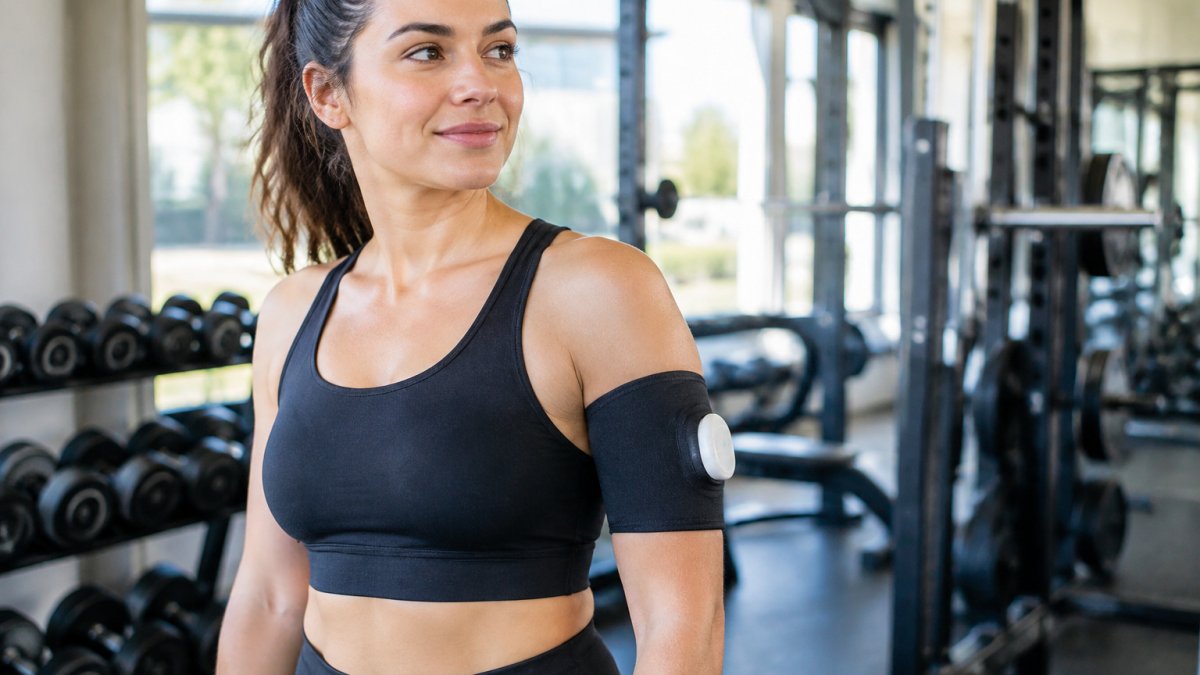
Some plans may reimburse accessories when they are listed under durable medical equipment, and this depends on documentation. Do not assume an armband qualifies just because the sensor does.
If you use a CGM sensor and keep losing sensors, this matters. Protective armbands are typically a self-paid purchase, so confirm coverage with your plan. Find practical fixes for a sensor that keeps peeling off.
Ask your plan these questions directly:
- Is a sensor-protection armband a covered supply?
- Does the plan require a specific code for accessories?
- Would a prescription or letter of medical necessity change the answer?
Commercial Plans, Pharmacy Benefits and Out-of-Pocket Costs
Commercial plans can handle CGMs differently from Medicare. Some plans cover CGMs under the medical benefit, while others route them through the pharmacy benefit, which can affect your copay, deductible and pharmacy options.
Some insurer policies also describe certain CGM uses as unproven or not medically necessary.
Out-of-pocket costs add up quickly. Replacing sensors early because they peel off can add up over time. Track:
- Your deductible and whether it is met
- Your coinsurance or copay for sensors
- Any annual out-of-pocket maximum
Pricing depends on quantity, dates and delivery. Visit the Libre Shield website for current prices or a quote.
How to Verify Coverage With Your Plan and Provider
A single phone call to member services is the most common way people get bad coverage information. The representative often answers a slightly different question than the one you asked, and “we cover CGM” can mean the sensor only, the transmitter only, or a specific brand under a specific benefit. Verification works best when you ask narrow, code-level questions and get the answer in writing.
Before you call: gather the right identifiers
Have your member ID, the prescriber’s NPI, the exact product name, and, if your plan or supplier uses them, the HCPCS codes for the CGM system and supplies. Ask your durable medical equipment (DME) supplier or the manufacturer’s reimbursement line for the codes they bill; most will provide them. Knowing whether the item is billed as DME or as a pharmacy benefit is the single biggest driver of your out-of-pocket cost.
The benefits-coordinator question script
Ask these in order and write down each answer verbatim:
- “Is a continuous glucose monitor and its supplies covered under my medical benefit or my pharmacy benefit?” The answer determines your deductible, coinsurance, and which network you must use.
- “Is prior authorization required for the CGM system? For the sensors? For any accessory?”
- “What is the exact list of covered supplies under this benefit?” Ask them to read the list back, including whether adhesives, overpatches, or protective bands appear.
- “Is a sensor-protection armband a covered supply, and if not, is it excluded as a convenience or personal-care item?”
- “If my prescriber submits a letter of medical necessity, would that change the coverage determination?”
- “What is my deductible, has it been met this plan year, and what will my coinsurance or copay be for the sensor and for the transmitter?”
- “Which DME suppliers or pharmacies are in network for this benefit?”
- “Can you send me a written confirmation of this, including the reference number for this call?”
Watch out: a representative who says “you’re covered” without naming the benefit, the code, and the prior-authorization status has not actually verified anything, ask them to confirm those three details before you hang up.
Use the plan’s own tools first
The Association of Diabetes Care & Education Specialists maintains a CGM coverage look-up tool that helps you check payer and plan eligibility before you call (ADCES CGM insurance coverage look-up tool). Your plan’s member portal usually also hosts the formulary and the medical policy documents, which are more reliable than a phone answer because they are the documents an appeal reviewer will actually use.
Confirm with the prescriber and the supplier
Your prescriber’s office can tell you whether they have documented the clinical criteria the plan requires, for example, a history of problematic hypoglycemia or a specific diabetes type. Your DME supplier can tell you which codes they will bill and whether they have seen the plan approve or deny that accessory before.
Get it in writing and keep the record
Ask for the confirmation by secure message or mail, and note the date, the representative’s name, the reference number, and the exact wording used. If the plan later denies the claim, this record is the first thing an appeal reviewer will ask for. Store it with your denial letter and any letter of medical necessity so the whole file stays together.
Medicare.gov guide to continuous glucose monitors
CGM Armband Reimbursement and HSA or FSA Eligibility
Reimbursement for armbands may vary, and some people use tax-advantaged accounts to pay for eligible items. A health savings account (HSA) or flexible spending account (FSA) may cover medical expenses that a plan does not reimburse.
Before you use these accounts, confirm eligibility with your account administrator. Rules on which items qualify can change, and you should keep receipts for any purchase.
- Save itemized receipts for sensor accessories
- Check your account’s list of eligible expenses
- Ask your administrator whether a prescription is needed
Appealing a Denied Claim for a CGM Accessory
A denial for a CGM accessory is not the end of the conversation. Most plans run a two-level internal appeal followed by an independent external review, and accessory denials are frequently overturned when the file contains the right documents. The key is to treat the appeal as a paperwork problem, not an argument.
Step 1: Read the denial letter for the exact reason code
The letter should state whether the denial was for “not medically necessary,” “not a covered benefit,” “experimental/investigational,” or “missing prior authorization.” Each reason requires a different response. If the letter cites a specific plan policy number or clinical criteria, request that document in writing, you are generally entitled to the criteria used to decide your claim under the plan’s internal appeal procedures and, for ERISA-governed employer plans, under the U.S.
Step 2: Request the plan’s coverage criteria in writing
Call member services and ask for the clinical coverage policy for the specific accessory code and for the CGM supply codes. Ask them to send it by mail or secure message. Having the criteria in hand lets your prescriber address each requirement line by line instead of guessing.
Step 3: Build a letter of medical necessity that maps to the criteria
A strong letter of medical necessity is not a paragraph saying “the patient needs this.” It is a short document, usually one to two pages, that follows the plan’s own criteria. A letter of medical necessity is typically organised around the plan’s criteria and may include:
- Patient identifiers and diagnosis codes, including the specific diabetes type and any documented hypoglycemia history.
- The device and accessory being requested, named exactly as the plan lists it, with the HCPCS or billing code if the plan uses one.
- A clinical rationale tied to the criteria, for example, repeated sensor dislodgement during physical activity, occupational exposure, or documented skin irritation from adhesives, each described with dates and frequency.
Watch out: a letter that argues the accessory is “helpful” or “convenient” gives the reviewer an easy denial, tie every sentence to a criterion the plan itself published.
Step 4: Submit at the right level and on time
Internal appeals must be filed within the window stated in the denial letter, which is plan-specific. Medicare appeal deadlines are set by program rules, so check the deadline stated in your denial notice. File at the level the letter specifies, keep a copy of everything, and send it by a method that produces a receipt (certified mail or the plan’s secure portal).
Step 5: Escalate to external review if the internal appeal fails
If the internal appeal is upheld, most commercial plans offer an independent external review conducted by a third-party reviewer. For employer plans, federal and state rules may set the framework for external reviews, so check which applies to your plan. The denial letter or the plan’s summary plan description should explain how to request it and the deadline, which is often measured in weeks rather than months.
Step 6: Keep a paper trail that survives a second denial
Log every call with the date, representative name, reference number, and what was promised. Save copies of the denial letter, the criteria document, the letter of medical necessity, and the submission receipt.
U.S. Department of Labor claims procedure regulation for ERISA plans
Medicare.gov appeals process for Part B items and services
The appeal process has a few concrete steps, and each one has a clear output a reader can check off.
| Step | What to do | Timing |
|---|---|---|
| 1. Read the denial | Find the exact reason code in the letter | Right away |
| 2. Request criteria | Ask for the clinical coverage policy in writing | Before drafting |
| 3. Build the letter | Tie each point to a plan criterion | Before submission |
| 4. Submit on time | File at the level the letter specifies | Within the stated window |
| 5. Escalate | Request external review if internal appeal fails | Often weeks, not months |
| 6. Keep records | Save denial, criteria, letter and receipt | Throughout |
Next Step: Protecting Your Sensor Without Relying on Insurance
If insurance will not cover an armband, you can still protect your sensor. Start by fixing common causes of peeling, such as skin prep and sweat, then consider a dedicated armband.
When you are ready to buy protection on your own, visit the Libre Shield website to learn about its sensor-protection armbands and current pricing. Compare protective gear for Libre sensors before you decide.
Frequently Asked Questions
Are CGM armbands covered by insurance?
In most cases, no. Insurance plans generally cover the CGM sensors, transmitters and related supplies when a prescription and medical necessity criteria are met, but accessories such as sensor-protection armbands are usually treated as non-covered personal items. Coverage depends on the payer, plan and state, so the reliable way to know is to ask your insurer directly and request the coverage determination in writing. Libre Shield does not provide insurance coverage determinations, and current pricing for its armbands is available on its website or through a quote.
Can I use HSA or FSA funds to buy a CGM armband?
Health Savings Accounts and Flexible Spending Accounts are generally used for qualified medical expenses, and some diabetes supplies qualify. Whether a specific CGM accessory is eligible depends on how the item is classified under your plan administrator’s rules. Keep the receipt, ask the administrator whether the armband qualifies, and confirm before you buy. Pricing depends on quantity and delivery, so check Libre Shield’s website for current prices.
What should I do if my insurer denies coverage for a CGM armband?
Start by requesting the denial in writing and reading the reason it was issued. If you believe the item is medically necessary, ask your prescribing provider to submit a letter explaining why the accessory protects a device you must use. Then file a formal appeal within the deadline listed in your plan documents. If the internal appeal is denied, you may be able to request an external review. Keep records of every call, date and reference number throughout the process.
How can I check whether my insurance covers a CGM accessory?
Call the member services number on your card and ask specifically whether the accessory is covered under your pharmacy or durable medical equipment benefit. Get the representative’s name and a reference number. The Association of Diabetes Care & Education Specialists maintains a CGM insurance coverage look-up tool that can help you confirm the sensor side of your coverage, which often differs from accessory coverage.
