Quick Summary
Most waterproof cgm sensor covers are really water-resistant, not fully waterproof, and their adhesive can weaken with heat or prolonged soaking. Compatibility with your exact sensor model matters more than the label, so confirm the model and patch size before buying. A simple home test of showering, swimming and sweating shows how a cover really performs.
- Water-resistant covers can support showers and swimming, but prolonged soaking may weaken the adhesive.
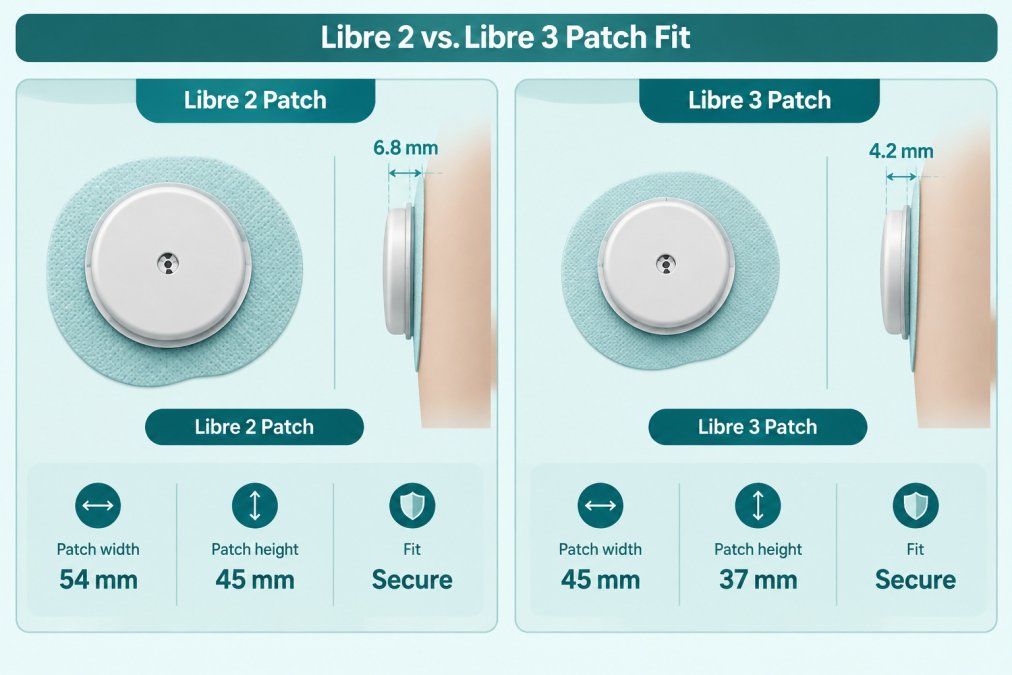
- Libre 2 and Libre 3 sensors differ in footprint, so a patch cut for one can overhang or expose the other.
- Heat, more than water, softens adhesive and lets edges lift during hot tub or bath exposure.
- Check edges within five minutes of leaving the water, while the patch is still wet, since lifting shows first then.
- Replace a cover with a lifted edge rather than pressing it back down, because the bond rarely recovers.
Table of Contents
- How We Reviewed Waterproof CGM Sensor Covers
- What Waterproof Actually Means for CGM Sensor Covers
- Best Libre 3 Sensor Covers Compared Side by Side
- CGM Covers for Swimming, Showering and Hot Tubs
- Best Libre 3 Sensor Covers for Sensitive Skin
- Libre Shield CGM Sensor Armbands: Fit, Protection and Cost Per Wear Day
- Choosing Your Cover and Getting a Quote from Libre Shield
- Frequently Asked Questions
How We Reviewed Waterproof CGM Sensor Covers
Waterproof CGM sensor covers are one of the most searched accessories for people who swim, shower, or sweat through their day, yet the claims on product pages rarely match what the evidence supports. This review looks at what the available research and product listings actually say, so you can judge which covers fit your routine. Libre Shield makes sensor saver armbands.
We reviewed published guidance, product listings, retailer review pages, and user reports. Where a claim could not be traced to a source, we say so. The 2026 material we found is limited: it concerns CGM water resistance and cover claims rather than controlled side-by-side tests of covers. That gap is important, and we treat it as a finding in its own right.
Our review criteria were:
- Water performance: Whether the product states a water-resistance or waterproof rating, and whether the claim is supported.
- Adhesion: How the cover is said to hold through wear, sweat, and movement.
- Compatibility: Which sensor models the product is made for.
- Skin considerations: Material, irritation risk, and how the cover is removed.
- Cost per wear day: Price divided by the advertised wear period, when both are shown.
What Waterproof Actually Means for CGM Sensor Covers
Water-resistant and waterproof are not the same thing, and sensor covers are often described with the wrong term. A 2026 guide to Libre 3 sensor covers states that the covers are water-resistant rather than waterproof, and notes that they support adhesion during showers and swimming (Type Strong, 2026 guide to Libre 3 sensor covers | type-strong.com). The same guide warns that prolonged soaking may weaken the adhesive.
That distinction matters in practice. A cover that handles a shower or a lap session may still lift after hours in a hot tub. Before you buy, check whether the seller gives a measured rating or only uses the word “waterproof” in marketing copy.
Some CGM devices carry their own water-resistance rating. A 2026 device roundup reports one CGM as water-resistant to three feet for 30 minutes (Type1Strong, 2026 CGM roundup | type1strong.org). That rating applies to the device, not to an added cover, so a cover should never be assumed to extend it.
Best Libre 3 Sensor Covers Compared Side by Side
Most roundups of Libre 3 covers list products without telling you which sensor generation each one actually fits, which is the single most common reason a patch obscures the sensor window, presses on the filament site, or peels at the edge within a day. The table below separates what a listing states from what we could verify, and the compatibility column is the one to read first.
| Product | Stated compatibility | Form factor | Stated wear or claim | Price | What we could verify |
|---|---|---|---|---|---|
| Libre Shield armband | Multiple CGM models (confirm model at checkout) | Hard-cap armband | Protective armband design | Contact for current pricing | Armband, not an adhesive overlay; no published water rating |
| Not Just a Patch | Adhesive patch (confirm sensor model on listing) | Adhesive patch | Designed to hold through swims and sweat | Not shown in results | No published water rating or wear-day figure |
| Libre 2/3 Sensor Covers, 50-pack | Libre 2 and Libre 3 | Adhesive patch | Advertised 14-day protection | Not shown in results | Waterproof claim not independently verified |
| 25-pack oval adhesive patches | FreeStyle Libre | Adhesive patch | Lightweight, nearly invisible | Not shown in results | One reviewer reported lifting in spots |
| Libre 3 sensor covers (category) | Libre 3 | Mixed | Helps protect from water and sweat | Varies by listing | One listing shows 4.2 stars from 944 ratings |
How to read the compatibility column. Libre 2 and Libre 3 do not share a footprint: the Libre 3 sensor is smaller and sits flatter, so a patch cut for Libre 2 can overhang the edge and curl, while a patch cut for Libre 3 can leave the Libre 2 housing exposed. Dexcom G7 and G6 differ from each other and from Libre in both diameter and housing height, so a “universal” patch is a fit compromise, not a guarantee. Before buying, confirm three things on the listing: the exact sensor model named, the patch diameter relative to the sensor, and whether the patch covers the sensor window or leaves it clear.
Pros and cons at a glance:
- Not Just a Patch: Built specifically for swims and sweat. The results do not show price, material, or a model-by-model fit chart.
- 50-pack Libre 2/3 covers: Good value if you need many replacements and use either Libre generation. The listing’s waterproof claim has no independent evidence behind it.
- Oval adhesive patches: Thin and discreet. One reviewer reported parts of the patch coming loose, and the oval shape leaves more edge exposed to curl than a round patch.
- Category listings: Easy to compare many options at once. This is a category page, so no single product is being reviewed and fit varies by listing.
Best for: Libre 3 users who want to compare several covers before buying and who will check the model fit before ordering.
Skip if: you need a verified waterproof rating or a published wear-day figure, which none of these listings provides.
CGM Covers for Swimming, Showering and Hot Tubs
Swimming, showering, and hot tubs are the hardest tests for any sensor cover, and almost no listing tells you how its waterproof claim was tested. If sensors keep lifting in water, this guide to stopping CGM sensor peeling covers more fixes. That is the gap this section fills: instead of repeating marketing labels, here is a repeatable protocol you can run at home so you can compare covers on the same terms, plus the mechanism behind why adhesive fails so you know what to watch for.
Why adhesive lifts. Most sensor-cover adhesives are pressure-sensitive: they bond best to clean, dry, oil-free skin and need sustained pressure to wet out and grip. Water alone is not the main enemy, heat is. Warm water softens the adhesive layer and lets it flow, and movement under water (a flip turn, a towel rub, a wetsuit sleeve) shears the softened edge. That is why a cover can survive a 10-minute shower and still lift after 30 minutes in a hot tub: the temperature, not the water, does the damage.
A four-test protocol you can repeat. Run each test on a fresh patch on a different site, and record the result rather than relying on memory.
- Shower test (10 minutes, warm water): Apply per the instructions, wait the stated drying time, then shower normally. Check the edges immediately after and again two hours later. Pass = no edge lift.
- Swim test (30 minutes, continuous): Swim laps or tread water for 30 minutes. Check all edges within five minutes of leaving the water, while the patch is still wet, this is when lifting first shows.
- Sweat test (45 minutes, elevated heart rate): Exercise until you are sweating freely, then let the patch dry on the skin without toweling it. Sweat salts and moisture trapped under an edge are a common cause of early failure.
- Soak test (20 minutes, hot water): This is the stress test. Soak in a hot bath or hot tub for 20 minutes, then check edges. Most covers that pass tests 1-3 will show some edge lift here; note how much and whether it reseals when pressed.
Record four data points per cover: minutes to first edge lift, whether the lift resealed when pressed, residue on removal, and skin condition 24 hours after removal. Two covers tested the same way tell you more than any star rating.
What user reports suggest. Individual reports point the same direction as the mechanism: one Walmart reviewer said patches came loose in spots after a few days, and a Reddit user described a cover beginning to curl within an hour. These are single experiences, not controlled comparisons, so treat them as warnings about edge behavior rather than proof that a product fails.
Watch out: a cover that lifts at one edge can let water reach the sensor, and pressing a lifted edge back down after it has been wet rarely restores the bond, replace the patch rather than resealing it.
Best Libre 3 Sensor Covers for Sensitive Skin
Sensitive skin is a separate concern from waterproofing. Adhesive that holds well can also irritate skin, and repeated removal can damage the top layer of skin. Look for covers that state their material clearly, such as latex-free or hypoallergenic, and avoid stacking several adhesive layers over the same spot.
Whichever cover you choose, rotate the placement site between sensors and remove the cover slowly to reduce skin trauma.
Libre Shield CGM Sensor Armbands: Fit, Protection and Cost Per Wear Day
Pricing depends on the model, quantity, and delivery details, and we do not publish a figure here. To work out cost per wear day, divide the price of a set by the number of days it covers, then compare that with the cost of replacing a sensor that falls off early. Use the current price on the product page, since prices can change.
Choosing Your Cover and Getting a Quote from Libre Shield
The right cover depends on how you use your sensor. If your sensor keeps lifting, start by checking the edges and skin preparation before buying a new product.
If an armband suits your routine, review the options on the Libre Shield site. For pricing on your specific setup, contact Libre Shield for a quote.
Frequently Asked Questions
Where can I find waterproof CGM sensor covers?
Waterproof and water-resistant CGM sensor covers are sold through retailers such as Amazon and Walmart, as well as from other manufacturers. Retail listings show pack sizes, compatibility and customer ratings, but prices vary by quantity and seller, so check each listing for current pricing. Before buying, confirm the cover is listed for your specific sensor model, since Libre 2 and Libre 3 products are not always interchangeable. For current pricing, request a quote from Libre Shield directly.
Are FreeStyle Libre sensor covers waterproof?
Most covers are water-resistant rather than fully waterproof. A 2026 consumer guide to Libre 3 covers notes that they support adhesion during showers and swimming, but prolonged soaking can weaken the adhesive. Water resistance does not guarantee protection during long immersion, so treat any cover as a way to reduce lifting and peeling, not as a guarantee. Check the sensor’s own water-resistance rating and follow the manufacturer’s guidance on how long the sensor can be submerged.
How do you keep a CGM sensor cover from peeling off?
Start with clean, dry, oil-free skin, and let any skin prep or lotion fully dry before applying the sensor and cover. Press the edges firmly for several seconds to activate the adhesive. Avoid applying oily products near the site, and trim loose or curled edges only if the manufacturer allows it. Users in product reviews report edges lifting after a few days, so check the cover after showers and workouts and reapply if an edge loosens.
Which CGM covers work best for sensitive skin?
Look for covers described as hypoallergenic or latex-free, and avoid stacking several adhesive layers on the same spot, which can increase irritation. Skin sensitivity varies, so do a short test wear before committing to a multipack, and watch for redness or itching after 24 hours. Removing adhesive slowly and gently, ideally with an adhesive remover made for medical tape, can reduce skin damage. If irritation persists, consult your diabetes care team about alternatives.
