Table of Contents
- Why Buy a Protective CGM Armband Online
- Waterproof CGM Sensor Covers Review: What Holds Up in Water
- CGM Armband Sizing Guide: Measure Before You Buy
- How to Keep CGM Sensor from Falling Off During Sports and Work
- Sleeve vs. Strap: Comparing CGM Band Types
- Skin Sensitivity and Material Safety for Daily CGM Wear
- Troubleshooting Sensor Signal Interference and Fit Issues
- Conclusion: Buying Your Protective CGM Armband Online
- Frequently Asked Questions
Last Updated: September 21, 2026
Why Buy a Protective CGM Armband Online
Buying a protective CGM armband online gives you access to specialized sensor security that local pharmacies rarely stock. A protective CGM armband is a reusable cover that holds your continuous glucose monitor firmly against your skin, shielding it from knocks, moisture, and the daily wear that causes premature detachment. This guide from Libre Shield walks through sizing, materials, waterproofing, and troubleshooting so you can order the right band the first time.
Most people start searching after a sensor peels loose mid-workout or catches on a doorframe. That failure usually has nothing to do with the sensor itself. It comes down to the adhesive patch losing grip under sweat, friction, or repeated movement. An armband adds a mechanical layer of security on top of the adhesive, so the sensor stays put even when the patch starts to weaken.
The stakes are practical, not abstract. Replacing a sensor early means another insertion, another warm-up period, and another hit to your supply budget. A well-fitted band protects the device you already paid for.
American Diabetes Association guidance on continuous glucose monitoring
The right armband does not replace your sensor’s adhesive. It reinforces it, adding physical security that keeps the sensor stable through sweat, impact, and daily movement.
Waterproof CGM Sensor Covers Review: What Holds Up in Water
Water resistance is the first thing to verify before you buy, but “waterproof” on a product page rarely means what shoppers assume. A waterproof CGM sensor cover needs to handle showers, swimming, hot tubs, and heavy sweating without trapping moisture against the skin or loosening its grip. The practical target is water resistance plus breathability, because a cover that blocks water in both directions also blocks sweat from escaping.
Here is how the common cover types compare in wet conditions:
| Cover Type | Water Handling | Breathability | Reusable |
|---|---|---|---|
| Neoprene armband | Water-resistant, sheds splashes | Moderate | Yes, many washes |
| Compression sleeve | Water-resistant, wicks sweat | High | Yes |
| Adhesive patch | Limited, edges lift in water | Low | No |
| Guard cover | Water-resistant shell | Low to moderate | Yes |
Neoprene holds up well in water but can feel warm during long wear. Moisture-wicking compression fabric breathes better and dries faster, which matters if you swim or train most days. Adhesive patches tend to lift at the edges after repeated exposure, which is exactly when a sensor comes loose.
The mechanism matters more than the label. Water weakens sensor adhesive in two ways: it softens the adhesive itself, and it creates a slippery film between the patch and the skin so the edge rolls up. A fabric band does not waterproof the sensor. It applies steady pressure across the patch so water cannot tunnel under the edge, and it keeps the sensor from lifting when you towel off or pull a shirt over your head.
If you swim or use a hot tub, treat the band as a drying tool as much as a cover. Rinse it in fresh water after chlorinated or saltwater exposure, wring it gently, and let it air-dry completely before the next wear. A band that stays damp between sessions can harbor odor and irritate skin. Many manufacturers describe their fabrics as machine washable; check the care tag, and avoid fabric softener, which leaves a residue that reduces wicking.
A common pattern is that people buy a “waterproof” band expecting it to make the sensor submersible indefinitely. No fabric band does that. What a good cover does is keep the sensor pressed against your skin so water cannot work its way under the adhesive edge, and it dries fast enough that the skin underneath is not sitting wet for hours.
A band that traps water against the skin can weaken the adhesive faster than no cover at all. Choose moisture-wicking fabric for swimming and hot tub use, and let the area dry fully between wears.
American Diabetes Association guidance on continuous glucose monitoring
CGM Armband Sizing Guide: Measure Before You Buy
Getting the size right is the difference between a band that stays put and one that slides, and most sizing advice stops at “measure your arm.” The measurement that actually matters is the circumference at the sensor site, not the widest part of your bicep. Wrap a soft tape measure snugly around the upper arm at the exact spot where the sensor sits, keep the tape level, and note the circumference. If you are between sizes, size up, because an adjustable strap can tighten but a band that is too small will pinch and roll.
A few measurement tips that save returns:
- Measure the arm you wear the sensor on, since arm sizes often differ
- Measure at the end of the day, when minor swelling is present
- Add a little room if you plan to wear the band over clothing
- Recheck the measurement if you gain or lose weight
For children, measure the upper arm the same way and choose the smallest adjustable option available. A band designed for a child should sit flat without bunching, and the strap should not need to be cinched so tight that it leaves marks. Adjustable straps with many fit points work best for growing kids.
This is where sleeve and strap sizing diverge, and it is the part most guides skip.
Use this decision rule:
- If your arm size is stable and you want maximum stability during long, sweaty sessions, choose a sleeve and measure carefully.
- If your arm size changes, you want quick on-and-off, or you are buying for more than one person, choose an adjustable strap.
- If you are between sizes on a sleeve, size up and consider a strap instead.
CDC information on managing diabetes day to day
How to Keep CGM Sensor from Falling Off During Sports and Work
Sensor security during activity comes down to three things: clean skin, a stable adhesive, and a band that does not shift. To keep a CGM sensor from falling off, apply the sensor to clean, dry, hair-free skin, press the adhesive edge down firmly, and cover it with a snug armband before you start moving. That combination handles sweat, impact, and the twisting motion that dislodges sensors during sport.
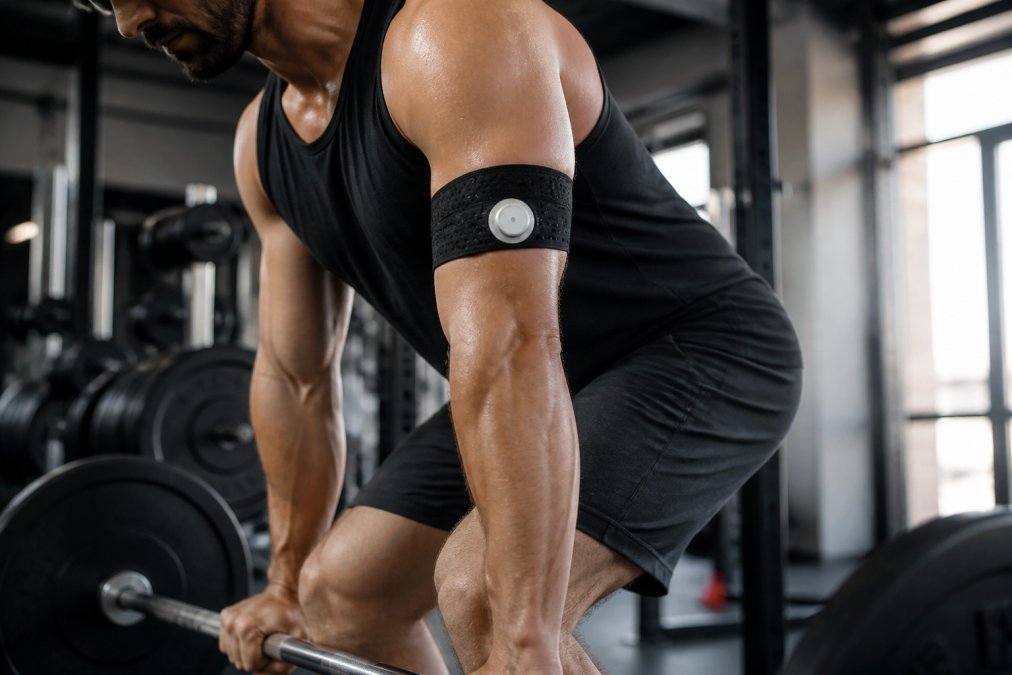
Practical habits that help:
- Apply the sensor at least an hour before heavy activity so the adhesive sets
- Avoid lotions and oils near the site, since they break down adhesive
- Wipe sweat from the area before re-securing the band after a session
- Keep a spare band in your gym bag or work locker
Rotate where you place the band slightly each time you re-secure it. Constant pressure in the exact same spot is a common cause of skin irritation for daily wearers.
Sleeve vs. Strap: Comparing CGM Band Types
Sleeves and straps solve the same problem in different ways, and the better choice depends on your activity. A compression sleeve covers a wider area and distributes pressure evenly, which suits swimming, running, and all-day wear. A strap or armband uses an adjustable band with a closure, which makes it easier to put on and take off and better for quick adjustments during the day.
| Feature | Compression Sleeve | Adjustable Strap |
|---|---|---|
| Coverage | Wide, full wrap | Focused on sensor |
| Fit adjustment | Fixed size | Customizable fit |
| Best for | Swimming, running, all-day wear | Quick changes, variable arm size |
| Removal | Pull off | Unfasten |
| Bulk under clothing | Low | Low to moderate |
Skin Sensitivity and Material Safety for Daily CGM Wear
Skin sensitivity is the issue most product pages skip, and it is the one that sends people back to adhesive patches that fail. If your skin reacts where the sensor sits, adding a layer of material can either help or make things worse, depending on what that material is. Look for hypoallergenic fabrics and breathable construction, and introduce any new band gradually rather than wearing it for a full day straight away.
Never ignore persistent skin irritation under a band. Continued friction and trapped moisture can break down the skin barrier and make the site unsuitable for your next sensor.
Troubleshooting Sensor Signal Interference and Fit Issues
Signal problems and fit problems often look the same, so start by separating them. If your readings drop out or the sensor loses connection, the cause is usually fit, not the band blocking the signal. A band that is too tight can press the sensor against the skin in a way that affects how it sits, and a band that is too loose lets the sensor shift, which disrupts readings.
Work through the basics first:
- Reposition the band so it sits flat over the sensor without pinching
- Check that the sensor itself has not partially lifted from the skin
- Make sure the band is not bunched or folded under itself
- Confirm the sensor is within range of your reader or phone
Conclusion: Buying Your Protective CGM Armband Online
Ordering online is the fastest way to get a band built for your sensor, your sport, and your skin, without waiting on a pharmacy that may not carry one. The key is matching the band to how you actually live: waterproof for swimmers, adjustable for growing kids and variable arm sizes, breathable for sensitive skin.
Frequently Asked Questions
What features should I look for in a protective CGM armband?
Look for a design that fully covers the sensor without pressing on it. Water-resistant or waterproof materials matter if you swim or sweat heavily.
How do I measure my arm for a custom CGM armband?
Wrap a flexible tape measure around your upper arm where you normally place your sensor. Keep the tape snug but not tight. Compare to the brand’s sizing chart.
Can a protective armband prevent my CGM from falling off?
A well-fitted armband adds a physical barrier that reduces sensor displacement from bumps, clothing snags, and sweat. It does not replace the adhesive patch, but it protects the patch from peeling. An armband can help keep the sensor secure for the full wear period. Choose a band with a snug fit.
Are waterproof CGM armbands effective for swimming?
Waterproof armbands keep the sensor dry and in place during swimming, showering, or hot tub use. They protect the adhesive patch from water intrusion that can cause early detachment. Look for a band labeled water-resistant or waterproof. Rinse and air-dry the band after each swim to maintain its fit.