Table of Contents
- Quick Comparison: Top Breathable Armbands for CGM Sensors
- Why Breathable Armbands Matter for Sensor Security
- Waterproof CGM Sensor Covers Review: What to Look For
- How to Keep CGM Sensor On During Exercise
- Best Adhesive Patches for FreeStyle Libre: Integration Tips
- Sizing and Fit Guide for Breathable Armbands
- Durability and Longevity: What to Expect
- Frequently Asked Questions
Last Updated: September 28, 2026
Quick Comparison: Top Breathable Armbands for CGM Sensors
Breathable armbands for CGM sensors solve a specific problem: keeping a continuous glucose monitor stuck to your arm through sweat, movement, and daily wear without trapping moisture against your skin. This guide from Libre Shield compares the leading options, explains what separates a good armband from a bad one, and shows you how to pick the right fit for your arm and your routine.
| Armband | Starting Price | Material | Best For |
|---|---|---|---|
| Libre Shield | See site for current pricing | Performance protection fabric | Active daily wear and high-impact activity |
| Overt Sensor Armband | $19.99 | Polyester/spandex blend | Sensitive skin, all ages |
| XYULIN Diabetic Sensor Armband | $12.99 | Ice-silk fabric | Hot weather, light daily wear |
| Dia-Band Universal Armband | Contact for pricing | Stretchable fabric | Universal CGM compatibility |
| Love My Libre Armbands | Contact for pricing | Water-resistant neoprene | Impact protection for athletes |
| Spandex CGM Arm Band (Etsy) | $48.99 | Spandex blend | Custom designs, handmade options |
Why Breathable Armbands Matter for Sensor Security
Breathable armbands matter because trapped moisture is the leading cause of premature sensor detachment. When sweat sits between the skin and the adhesive patch, the bond weakens within hours. A breathable armband lets that moisture escape while holding the sensor housing in place.
Sweat-Wicking and Moisture Management
Sweat-wicking fabric pulls moisture away from the skin and spreads it across the surface so it evaporates faster. Moisture-wicking armbands use this principle to keep the adhesive patch dry during exercise.
Skin-Friendly and Latex-Free Materials
Skin-friendly armbands use latex-free, hypoallergenic fabrics to reduce irritation where the sensor sits. If you already have sensitive skin under your CGM, adding a rough or latex-containing material makes things worse.
Do not buy a waterproof neoprene band for everyday wear. Neoprene holds sweat against the skin, which softens the adhesive patch and can cause irritation. Save it for swimming, where water resistance matters more than airflow.
Waterproof CGM Sensor Covers Review: What to Look For
A waterproof CGM sensor cover is designed to keep water out during swimming, bathing, or showering. The best options combine water resistance with breathability so the skin underneath can still manage moisture between exposures. But the two questions most buyers actually have, does the fabric block the Bluetooth signal, and does the cover replace or complement an adhesive patch, are almost never answered on product pages.
Does Fabric Thickness Interfere With the Signal?
This is the gap almost no competitor addresses. A CGM transmitter sends a low-energy Bluetooth signal to your receiver or phone, and anything between the two can, in theory, attenuate it. In practice, the fabric used in breathable armbands is thin enough that most users report no change in connectivity. The variables that matter more are:
- Distance: Bluetooth range drops sharply once you move more than roughly 20 to 30 feet from your phone, with or without a band.
- Body blocking: Your own torso between the sensor and the phone weakens the signal more than any fabric layer does.
- Metal content: A band with metallic thread, foil lining, or a metal clasp is the one material to avoid, because metal reflects rather than passes radio waves.
- Wet fabric: A soaked band can slightly reduce range, but the effect is usually smaller than the drop you get from putting a wall between sensor and phone.
Do These Bands Replace Adhesive Patches?
No, and this is the second gap most guides skip. An adhesive patch bonds the sensor’s plastic edge to your skin. An armband holds the whole assembly in place from the outside. They solve different problems:
- Patch alone: Good edge adhesion, but the sensor housing can still catch on clothing or gym equipment.
- Band alone: Good impact protection, but the sensor’s own adhesive is still doing the skin-bonding work.
- Both together: The patch keeps the edge sealed; the band absorbs knocks and friction. This is the combination most long-term users settle on.
What to Compare Before Buying
- Seal quality: Does it sit flat around the sensor edge, or bunch up?
- Material: Water-resistant neoprene for swimming, breathable knit for daily wear
- Fit: Snug without pinching, and sized to your arm circumference
- Washability: Machine-washable covers last longer and stay hygienic
- Metal content: Avoid metallic thread or clasps if you have had signal dropouts
The FDA guidance on continuous glucose monitoring devices explains how these sensors are meant to be worn, which helps you understand why protecting the adhesive matters.
If you have had Bluetooth dropouts, check the band material before blaming the sensor. Metal thread and clasps are the most common culprits; ordinary knit fabric rarely causes a problem.
How to Keep CGM Sensor On During Exercise
To keep a CGM sensor on during exercise, control sweat at the sensor site and reduce friction from movement. A breathable armband does both: it wicks moisture away and holds the sensor housing steady so it does not shift.
- Clean and dry the site fully before applying the sensor.
- Let the adhesive set for a few hours before intense activity.
- Slide the breathable armband over the sensor so the housing sits flat.
- Check the band position before your workout starts.
- After exercise, rinse the band and let your skin air dry.
For high-sweat activities like CrossFit or hot yoga, put the armband on before you start sweating, not after. Once moisture is under the band, it cannot wick as effectively.
Best Adhesive Patches for FreeStyle Libre: Integration Tips
The best adhesive patches for FreeStyle Libre work alongside an armband, not instead of one. Patches hold the sensor edge down; the armband protects the whole assembly from knocks and movement. Used together, they cover each other’s weak points.
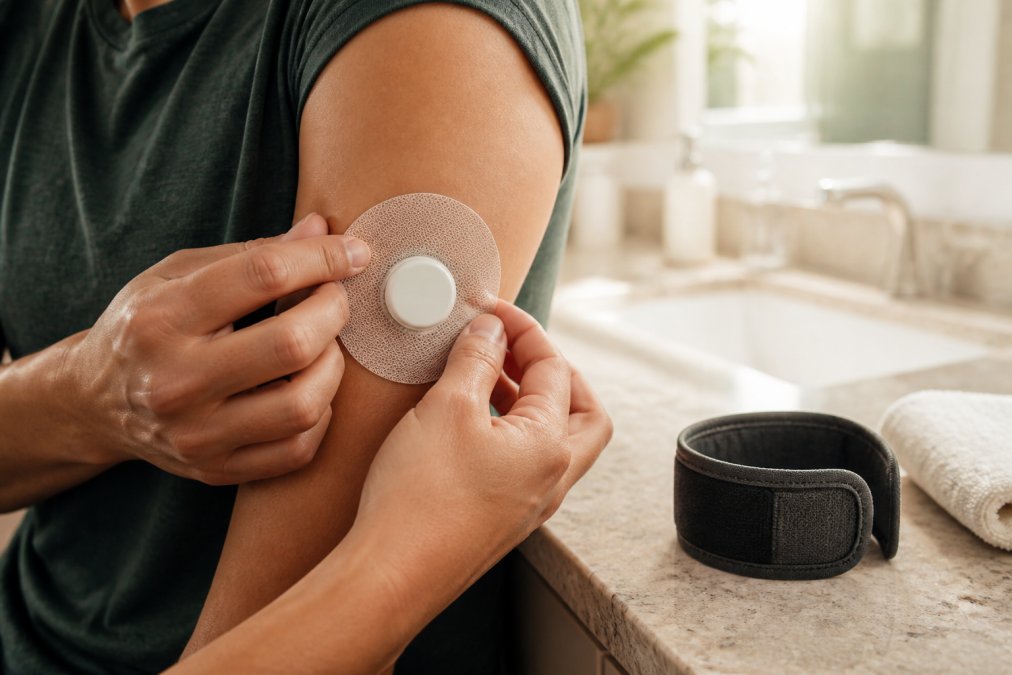
Integration tips that make a difference:
- Apply the patch first, pressing firmly around the sensor edge.
- Wait for the patch to fully bond before adding the armband.
- Choose an armband that covers the patch without peeling its edges.
- Avoid stacking multiple patches, which adds bulk and traps moisture.
Sizing and Fit Guide for Breathable Armbands
Sizing is where most armband purchases go wrong. A band that is too loose slides and leaves the sensor exposed; one that is too tight restricts airflow and defeats the purpose of a breathable design. Measure your upper arm circumference at the point where the sensor sits, then match it to the band’s size range.
| Arm Circumference | Suggested Fit | Notes |
|---|---|---|
| Under 20 cm | Child or small adult | Best for kids aged 4+ and petite arms |
| 20-28 cm | Small to medium | Most common adult range |
| 28-36 cm | Medium to large | Check elasticity before buying |
| Over 36 cm | Large or adjustable | Look for stretchable, non-slip fabric |
Durability and Longevity: What to Expect
A quality breathable armband should last through repeated washing and daily wear for months, not weeks. Durability comes down to fabric quality, stitching, and how well the elasticity holds up over time, but the reason durability matters is not just cost. A stretched-out band stops holding the sensor steady, and a band that traps moisture after repeated washes can start irritating the skin underneath.
What Actually Wears Out First
Most armbands fail in a predictable order:
- Elasticity. Spandex and elastane fibers fatigue with heat and repeated stretching. A band that fit snugly in week one can feel loose by week six.
- Edge stitching. The seam where the fabric meets the elastic band takes the most stress when you pull the band on and off.
- Fabric surface. Pilling and thinning show up first where the band rubs against clothing.
- Color. Fading is cosmetic, but it is often the first visible sign the fabric is breaking down.
A band that still recovers its shape after stretching is doing its job. A band that stays stretched out is not.
Washing Without Killing the Elastic
Heat is the enemy of stretch fabric. To get the most life out of a breathable armband:
- Wash in cold water, ideally on a gentle cycle or by hand.
- Skip the dryer. Air-dry flat or hang to dry.
- Avoid fabric softener, which coats the fibers and reduces wicking.
- Use a mild detergent; harsh detergents break down spandex faster.
- Wash after every two to three wears during heavy-sweat seasons to prevent salt and oil buildup.
The Skin-Health Angle Most Guides Miss
Durability is not just about the band surviving, it is about what the band does to your skin over time. A worn-out band that no longer wicks properly holds sweat against the sensor site. That trapped moisture is the setup for two problems competitors rarely discuss:
- Contact dermatitis: Prolonged moisture plus friction can trigger redness, itching, and small bumps under the band. Switching to a fresh, clean band and letting the skin air-dry between wears usually resolves mild cases.
- Adhesive breakdown: Sweat softens the sensor’s adhesive from the edges inward. A band that used to wick well but now stays damp accelerates that process.
When to Replace a Band
Replace when any of these show up:
- The band no longer springs back after stretching.
- Edges are fraying or the elastic is exposed.
- The fabric stays damp long after a workout.
- You notice recurring irritation at the same spot.
Our armbands are built for durability and performance protection, so the sensor stays secure through daily activities, workouts, and everything in between.
Frequently Asked Questions
Is there a waterproof armband for the FreeStyle Libre sensor?
Yes, several breathable armbands are designed to be water-resistant for swimming and showering. Look for materials like neoprene or spandex blends that repel moisture while maintaining breathability. These covers protect the sensor from water exposure without trapping sweat against the skin, which helps prevent adhesive failure. Always check the product specifications for water resistance levels and ensure the armband fits snugly to prevent water ingress during extended water activities.
How do I keep my CGM sensor from falling off during exercise?
Preventing sensor dislodgement during exercise starts with proper skin preparation: clean the site with alcohol, let it dry completely, and apply an adhesive patch before securing a breathable armband. Choose an armband with sweat-wicking and moisture-wicking properties to manage perspiration, which can weaken adhesives. Compression sleeves or non-slip armbands provide extra security for high-intensity activities. Avoid lotions before application, and consider using an overpatch for added durability during sports.
Can I use breathable armbands with adhesive patches for FreeStyle Libre?
Yes, breathable armbands are designed to work alongside adhesive patches. Apply the patch directly over the sensor, then slide the armband over it for added protection. This combination secures the sensor housing and reduces the risk of peeling edges. Ensure the armband is not too tight, as excessive compression can affect sensor readings or cause skin irritation. The best adhesive patches for FreeStyle Libre are latex-free and hypoallergenic, and pairing them with a breathable armband extends wear time.
What materials make a CGM armband breathable and skin-friendly?
Breathable armbands typically use moisture-wicking fabrics like spandex, polyester blends, or ice-silk. These materials allow air circulation and pull sweat away from the skin, reducing irritation and adhesive failure. Look for latex-free and hypoallergenic options if you have sensitive skin. Features like breathable mesh or 3D knitting enhance airflow. Avoid neoprene if you need maximum breathability, as it traps heat, though it offers water resistance. The right fabric balances comfort, durability, and sensor stability for daily wear.
How do I choose the right size armband for my arm circumference?
Measure your upper arm circumference at the sensor site using a flexible tape measure. Most brands provide sizing charts based on arm circumference ranges (e.g., 9-11 inches for small, 11-13 inches for medium). A proper fit should be snug but not restrictive; you should be able to slide a finger under the band. For children or petite adults, look for pediatric sizes or adjustable straps. If between sizes, size up to avoid compression that could affect sensor accuracy or cause discomfort during physical activity.
Choosing the right breathable armband comes down to fit, fabric, and how well it holds up over time. Get those three right, and you stop replacing sensors early. Libre Shield builds sensor saver armbands for exactly this purpose: durable protection that keeps your CGM secure during every activity. Explore the Libre Shield range to find the fit that matches your arm and your routine.