Table of Contents
- Why Active CGM Users Need Better Protection
- How to Keep Sensor Secure During Sports
- Best CGM Protective Armbands for High-Intensity Activity
- Preventing CGM Sensor Detachment: What Actually Works
- CGM Protection Options Compared: Armbands vs. Adhesive Patches
- CGM Protection Cost vs. Value: What Active Users Should Know
- Conclusion
- Frequently Asked Questions
Last Updated: September 23, 2026
Why Active CGM Users Need Better Protection
Continuous glucose monitoring has changed how people with diabetes train, work, and sleep. Yet the hardware has a weak point: the adhesive holding a sensor to your skin. For anyone who sweats, swims, or lifts heavy things, that weak point becomes the whole problem.
This guide from Libre Shield covers the real options for keeping a sensor attached, from armbands to patches, and explains which approach holds up when your day involves a pool, a squat rack, or a construction site. Libre Shield builds sensor saver armbands specifically for this problem, so we have a clear bias toward mechanical protection. We will still tell you where it is not the right answer.
Here is the tension most guides ignore: the sensor is not fragile, the attachment is. A continuous glucose monitor can survive a 30-minute warm-up and a 15-day wear cycle. What it cannot survive is a towel catching the edge of a patch, or chlorinated water dissolving the glue while you swim laps.
The FDA guidance on continuous glucose monitor labeling treats sensor adhesion as a core performance claim, not an afterthought. That tells you something about where failures actually happen.
How to Keep Sensor Secure During Sports
The most reliable way to keep a sensor secure during sports is to remove the use points that peel it off: friction from clothing, water exposure, and direct impact. Adhesive alone handles none of those well.
A practical sequence works better than any single product:
- Clean and dry the site, then let it sit for a few minutes before applying the sensor.
- Apply the sensor per the manufacturer’s instructions, pressing firmly around the edge.
- Add a mechanical layer over the top: an armband, a compression sleeve, or a rigid cover.
- Check the seal after every session, especially after swimming or heavy sweating.
- Keep a spare patch or band in your gym bag for fast repairs.
Timing matters more than product choice. Applying a sensor right before a workout gives the adhesive no time to cure; apply it the night before and the bond is noticeably stronger by morning.
If you swim, rinse the sensor site with fresh water and pat it dry after every session. Chlorine and salt both degrade adhesive faster than sweat does, and most people never check the seal until the sensor is already loose.
Best CGM Protective Armbands for High-Intensity Activity
The best protective armband for high-intensity activity holds the sensor flat against the arm without compressing it, stays put through sweat, and can be re-tensioned mid-session. Fit matters more than brand. But first, understand why high-intensity work breaks sensors in ways a walk around the block never will.
The physiology problem no generic guide covers. During sustained aerobic effort, working muscle pulls glucose out of the bloodstream faster than the liver can release it. For active users on insulin, that can mean a rapid drop that shows up on a CGM as a steep downward arrow, sometimes 2 to 4 mg/dL per minute during a hard interval session. If your sensor is even slightly loose, the interstitial fluid reading lags further behind the blood reading, and the lag widens exactly when you need accuracy most. A mechanically secure sensor does not fix the lag, but it keeps the lag predictable instead of erratic, the difference between trusting the number and second-guessing it mid-set.
The sweat problem. A sensor site produces sweat under a patch, and sweat carries salts and urea that attack the same acrylic adhesive holding the sensor down. A patch traps that moisture against the skin. An armband that holds the sensor mechanically lets the site breathe, so the adhesive is not fighting a losing battle against its own trapped moisture.
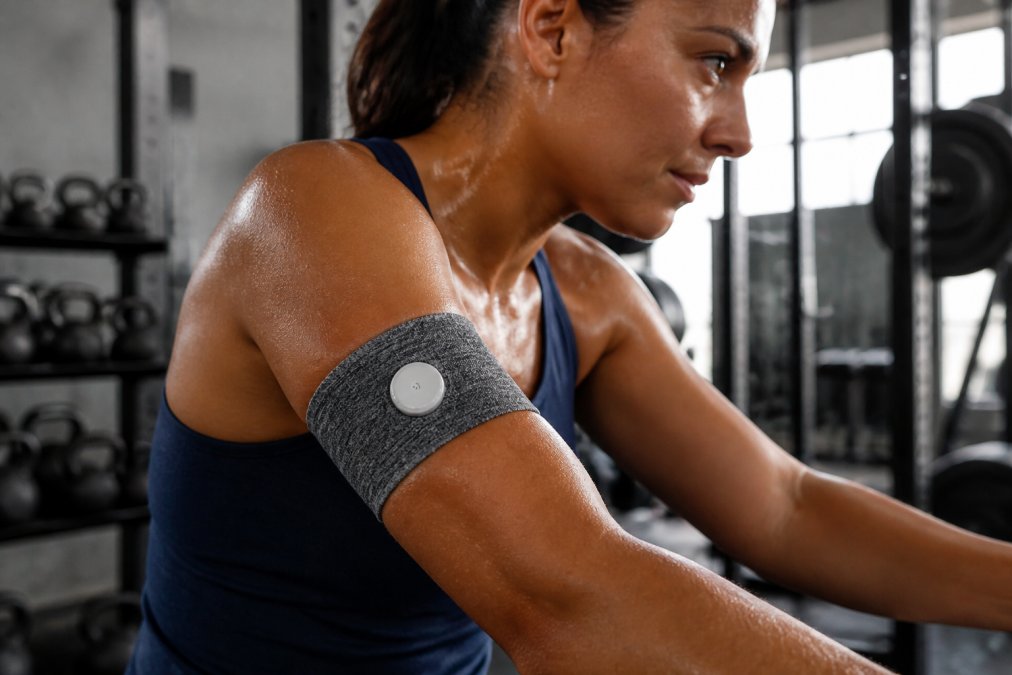
Libre Shield is our top pick for active users because it was designed around exactly this use case: a sensor saver armband that keeps the device secure during daily movement and physical activity. It does not rely on adhesive at all, so sweat, water, and friction do not wear it down the way they wear down a patch. For CrossFit, swimming, and physical jobs, that mechanical layer is the difference between a sensor that lasts its full wear cycle and one you replace early.
The honest limitation: an armband adds a layer over the sensor, so you need to get the fit right. Too loose and it slides. Too tight and it is uncomfortable under a shirt.
What to check before you buy any of them:
- Sensor compression. A band that presses directly on the sensor body can cause false low readings, a known issue called compression low. Look for a band that holds the sensor flat without pinching it.
- Re-tensioning. Can you tighten it mid-session without removing it? Sweat and movement loosen fabric over 45-60 minutes.
- Washability. A band you cannot rinse after every session becomes a skin-irritation problem within a week.
- Offline behavior. If the band pairs with an app, confirm the app still logs locally when you are out of cell range on a trail or in a basement gym.
| Option | Type | Best For | Key Limitation |
|---|---|---|---|
| Libre Shield | Protective armband | High-impact sport, swimming, physical jobs | Fit must be dialed in |
| Dexcom G7 | CGM system | Smaller on-body footprint, follower sharing | Requires prescription |
| FreeStyle Libre 2 Plus | CGM system | 15-day wear, water resistance | Hardware compatibility |
| Omnipod 5 | Insulin delivery | Tubeless automated dosing | Needs compatible CGM |
If you train fasted or do early-morning intervals, apply a fresh sensor the night before, not the morning of. The adhesive cures overnight, and you avoid starting a hard session with a bond that has not set.
Preventing CGM Sensor Detachment: What Actually Works
Preventing sensor detachment comes down to three things: surface prep, mechanical coverage, and post-activity checks. Skip any one and you will keep losing sensors early.
Do not apply a new band or patch over a sensor that has already shifted position. Trapping a misaligned sensor can distort readings, and you will not notice until your numbers look wrong.
CGM Protection Options Compared: Armbands vs. Adhesive Patches
Armbands win for high-impact activity and water exposure. Adhesive patches win for low-profile everyday wear and cost. The right choice depends on how much punishment your sensor takes.
CGM Protection Cost vs. Value: What Active Users Should Know
Count how many sensors you replaced early in the last six months. Multiply by two for an annual figure. Then compare that number to the price of one reusable band. Most active users find the break-even point arrives faster than they expect, and the data continuity is worth more than the dollar difference.
Pricing depends on quantity, dates, and delivery. Check the Libre Shield website for current pricing rather than relying on secondhand figures.
Do not assume a cheaper patch is the frugal choice. A patch that fails mid-swim costs you the patch, the sensor, and the training data from that session. The cheapest option on the shelf is rarely the cheapest option across a training year.
Conclusion
Losing sensors mid-training cycle is the problem nobody warns you about, and it costs both money and data continuity. Libre Shield builds sensor saver armbands that hold a CGM in place through sweat, water, and impact, so your device stays secure instead of peeling off at the worst moment. The armbands are engineered for durability and made for people who rely on their CGM every hour.
Frequently Asked Questions
How do I keep my CGM sensor from falling off during exercise?
The most reliable approach combines proper skin preparation with a physical securing method. Clean and dry the site thoroughly before applying the sensor, then use a protective armband or cover that holds the sensor flat against your skin. Avoid pulling clothing over the sensor roughly. For high-sweat activities like CrossFit or running, an armband that wraps around the limb provides more consistent security than adhesive patches alone, which can peel when moisture builds up.
What are the best protective armbands for continuous glucose monitors?
The best armbands share a few traits: they hold the sensor flat without pressing on the filament, they use breathable fabric that manages sweat, and they stay put during movement. Look for adjustable sizing that fits your arm circumference, a design that does not interfere with Bluetooth transmission, and materials that are gentle on sensitive skin. Armbands designed specifically for your sensor model fit better than generic sleeves because the cutout aligns with the sensor shape.
Are there better alternatives to adhesive patches for CGM security?
Adhesive patches work for some users but often peel during swimming, heavy sweating, or friction from clothing. A fabric armband that wraps around the arm offers mechanical security that does not depend on adhesive alone. Many active users combine both: a patch for the skin-level hold and an armband for physical protection. If you have sensitive skin, an armband reduces how often you need to reapply adhesive, which means less irritation over time.
How can I protect my sensor during high-intensity sports?
For sports like swimming, martial arts, or contact sports, a low-profile armband that sits flush against the skin works best. It should not add bulk that catches on equipment or clothing. Check that the armband is water-resistant or quick-drying if you swim or sweat heavily. Also confirm it does not block the sensor’s Bluetooth signal to your phone or receiver. Testing the setup during a practice session before competition day helps you catch fit issues early.
What features should I look for in a CGM sensor cover?
Prioritize four things: a secure fit that does not shift during movement, breathable material that reduces sweat buildup, compatibility with your specific sensor model, and a design that does not interfere with readings or data transmission. Water resistance matters if you swim or shower frequently. Adjustability helps if you wear the sensor on different body sites. Finally, check that the cover is easy to put on and take off so you can replace it without disturbing the sensor itself.
This article is for general information only and is not medical advice. Always follow your CGM manufacturer’s instructions and consult your healthcare provider about your diabetes management.