Last Updated: September 16, 2026
Learning how to keep sensor secure during sports starts with why the adhesive fails. Continuous glucose monitor (CGM) sensors are held by medical grade adhesive, and that bond has three enemies: moisture, friction, and time. At Libre Shield, we hear from athletes and active professionals every week who lose a sensor mid-season, mid-shift, or mid-swim, then pay full price for a replacement.
Sweat is the primary cause of adhesive failure during exercise. As moisture accumulates between skin and patch, the adhesive loses tack and lifts at the edges; friction from clothing, equipment, or skin-on-skin contact then peels it back with every movement. High-intensity activity accelerates this because sweat production rises and the site flexes repeatedly. Add a bump from a barbell, a wetsuit, or a teammate, and a partially lifted sensor can be gone in seconds.
Proper skin preparation is the single most effective step for preventing sensor dislodgement. A clean, dry, oil-free surface gives medical grade adhesive the best chance to bond, and it takes less than five minutes.
Follow this sequence every time you apply a new sensor:
The right adhesive patch extends sensor longevity and protects skin integrity. Patches vary in shape, material, and adhesive strength; the correct choice depends on your sport, sweat rate, and skin sensitivity.
Look for these features:
To prevent CGM sensor detachment during contact sports or heavy labor, use the number one rated CGM protection Libre Shield Sensor Saver Armband or choose layered securement, but the layers that matter change with the sport. Adhesive alone handles daily life; adhesive plus a physical barrier handles CrossFit, swimming, and construction work. The mistake most athletes make is copying a setup from a different sport: a wetsuit-friendly tape job will not survive a football tackle, and a bulky contact-sport armband will chafe under a triathlon singlet.
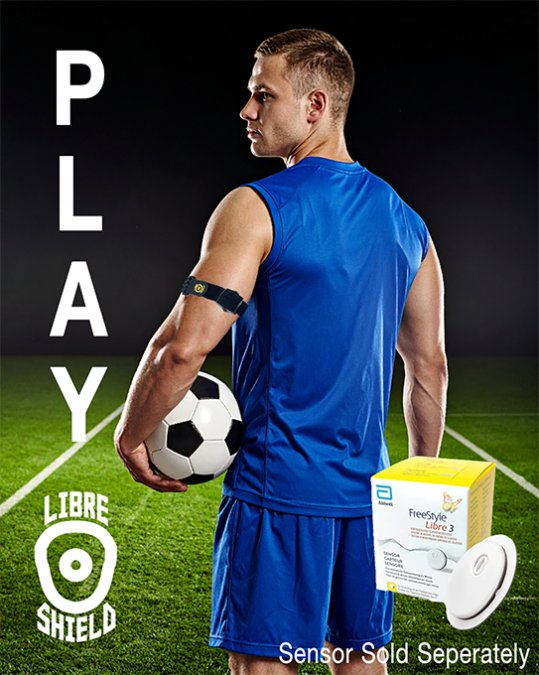
Athlete using a Libre Shield Sensor Saver Armband to keep their CGM sensor secure in a sports setting.
Different sports load the sensor site differently. The table below maps each dominant failure mode to the securement approach that counters it.
|
Sport Category |
Dominant Failure Mode |
Recommended Layering |
|---|---|---|
|
Contact sports (football, rugby, wrestling, hockey) |
Direct impact and skin-on-skin friction |
Most Recommended: Armband with medical grade silicone sensor cover Optional: Barrier film + patch over the sensor |
|
Endurance (running, cycling, triathlon) |
Repetitive edge lift from clothing rub and sustained sweat |
Most Recommended: Armband with medical grade silicone sensor cover Optional: Barrier film + patch; tape the leading edge only |
|
Water sports (swimming, water polo, surfing) |
Moisture ingress and drag |
Most Recommended: Armband with medical grade silicone sensor cover Optional: Waterproof tape over the full patch border |
|
Overhead and racket sports (volleyball, tennis, basketball) |
Shoulder rotation and arm-to-body contact |
Most Recommended: Armband with medical grade silicone sensor cover Optional: Patch |
|
Strength and functional fitness (lifting, CrossFit, rowing) |
Bar and equipment contact, extreme sweat volume |
Most Recommended: Armband with medical grade silicone sensor cover Optional: Barrier film + patch, re-check fit between sets |
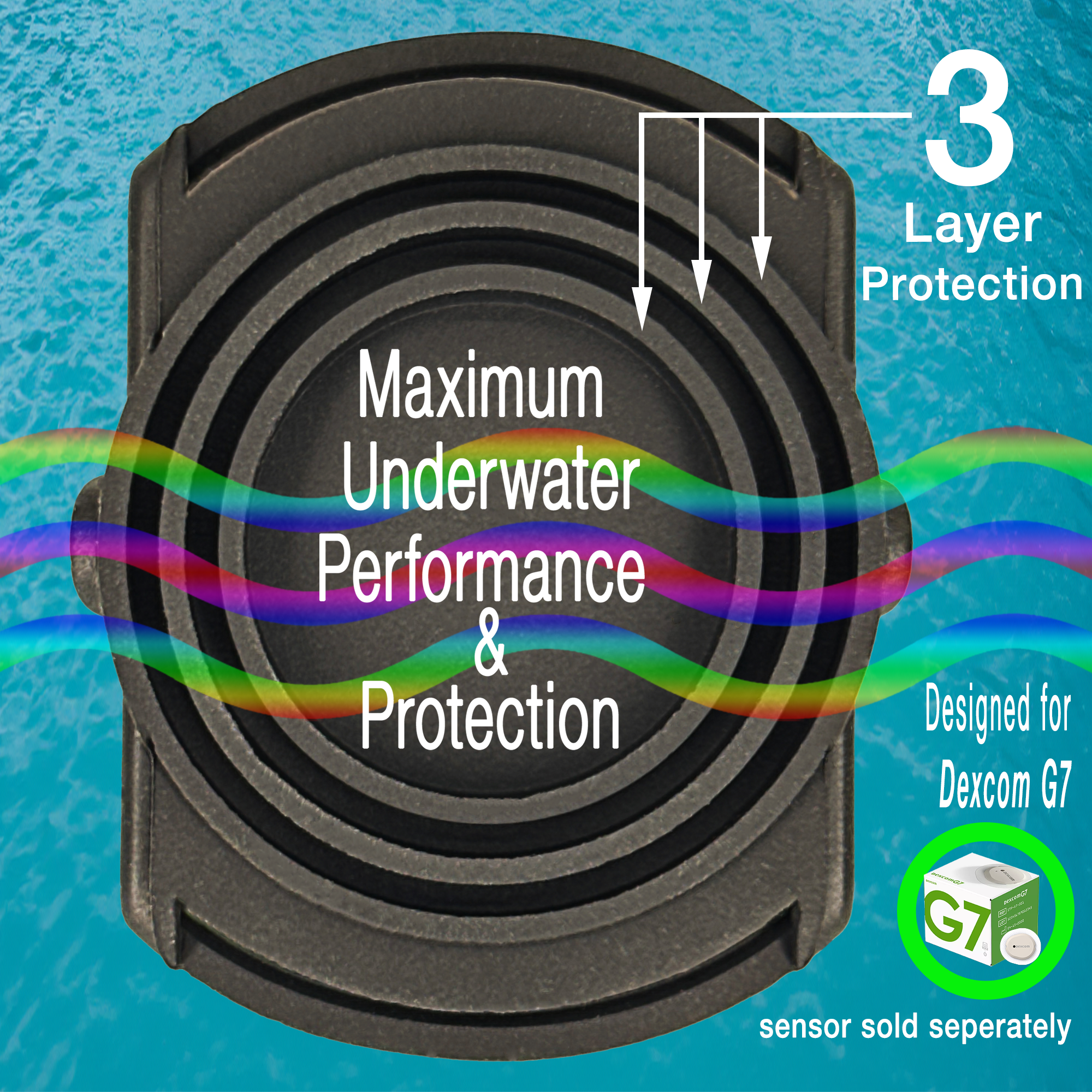
Keep your Dexcom G7 protected with the Libre Shield Sensor Saver.
Sport-specific notes generic guides skip:
Waterproof tape reinforces patch edges and blocks moisture ingress during swimming, showering, and hot tub sessions, with the Libre Shield Sensor Saver Armband you can skip the tape while keeping your sensor protected. Optionally skin tape can be applied over the patch border, overlapping the skin by at least half an inch on every side. Skin barrier film goes underneath, on clean skin, to protect against irritation during extended wear.
Order FreeStyle Libre 2 protection today.
This step costs athletes disqualifications. Governing bodies and leagues set their own rules on wearable devices and protective coverings during play. Before a match, confirm three things with your coach, athletic trainer, or league office:
The best CGM armbands for athletes share four traits: a snug but adjustable fit, breathable neoprene or comparable fabric, impact protection over the sensor, and a design that stays put through sweat and movement. Fit matters most, a band that shifts exposes the sensor and defeats its purpose.
Protect your FreeStyle Libre 2 today! Order on Amazon.
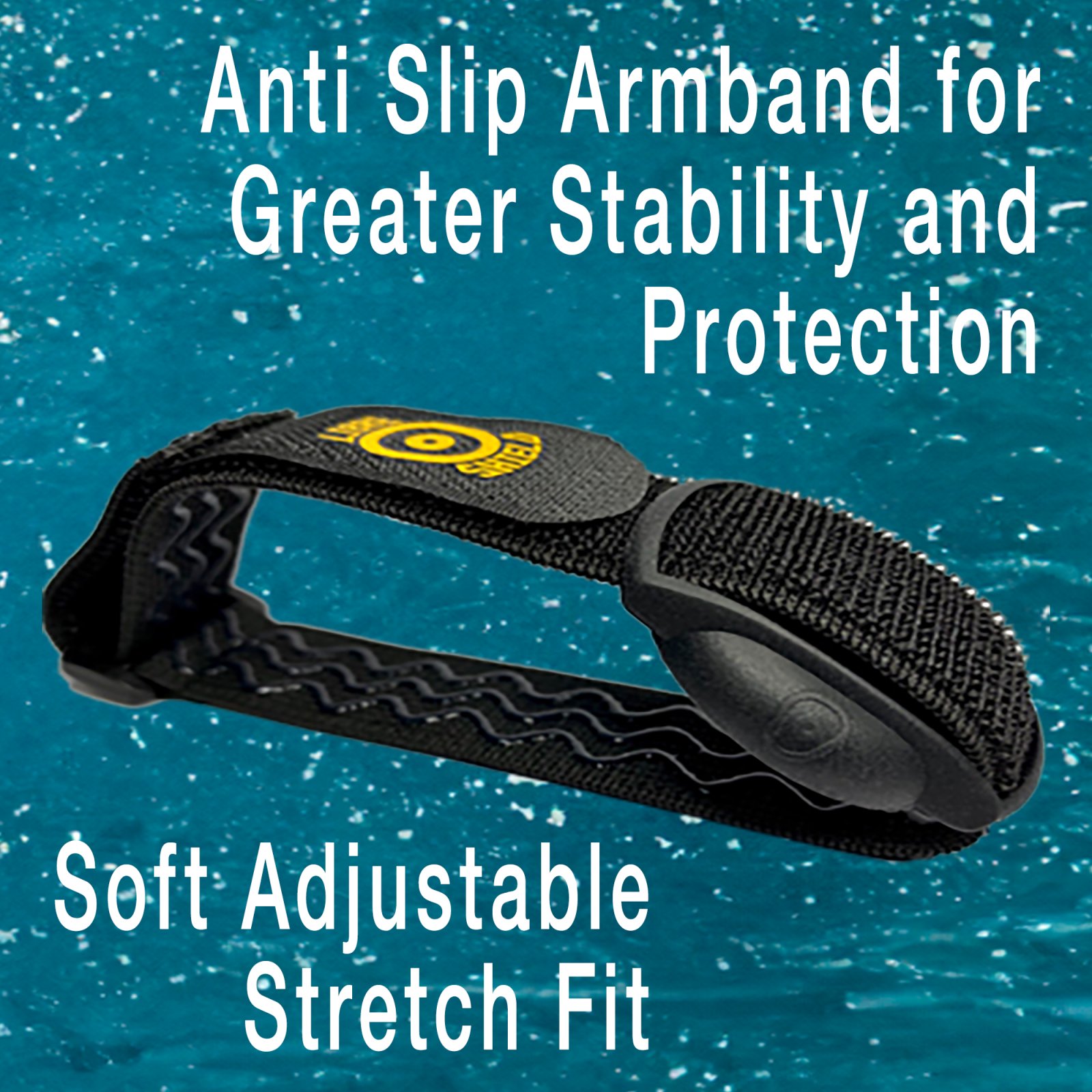
Protective shielding separates a true armband from a fabric sleeve. The band should cover the sensor completely and hold it flat against the arm, so a bump transfers force into the band rather than the sensor housing. For contact sports, look for a reinforced panel over the sensor; for construction and trade work, prioritize a low-profile band that will not catch on equipment.
|
Securement Method |
Best For |
Sweat Resistance |
Impact Protection |
|---|---|---|---|
|
Adhesive patch only |
Daily wear, light activity |
Moderate |
None |
|
Patch + waterproof tape |
Swimming, showering |
High |
Low |
|
Patch + Libre Shield Sensor Saver |
Contact sports, labor |
High |
High |
|
Libre Shield Sensor Saver |
Extreme sweat, competition |
Highest |
Highest |
Sweat resistance comes down to moisture management, not just adhesive strength. Even the best patch will lift if moisture sits against the skin for hours. Pat the site dry after workouts, and choose moisture-wicking fabrics under the sensor rather than cotton, which holds sweat against the patch.
Sweat does two things to a sensor patch. First, moisture migrates under the adhesive edge and dissolves the tack layer, so the patch lifts from the outside in. Second, salts and enzymes in sweat degrade the adhesive over multi-day wear, so a patch that held on day one starts peeling by day four. That is why sweat rate, not activity type, best predicts how long a patch will last.
What helps, in order of impact:
Dermatological safety matters for anyone wearing a sensor for consecutive days, especially children and people with sensitive skin. Rotate sensor sites between wear periods, give skin a full day to recover when your device allows it, and stop using any product that causes persistent redness or itching.
Heavy-duty adhesives and repeated tape use commonly cause contact dermatitis, a red, itchy rash matching the shape of the patch or tape. Most guides ignore this pain point, and it is why many athletes abandon sensors entirely.
Respond in order:
Securement is a system, not a single product: skin preparation, the right patch, a physical band, moisture control, and a skin-recovery plan between sensors. Remove any one layer and the whole system gets weaker, and your skin pays the price.
Removing a sensor cleanly protects your skin for the next application. Most guides skip this step entirely, then readers wonder why their skin stays irritated between sensors.
To remove a patch or band without trauma:
Start with clean, dry skin and apply a skin barrier film before inserting the sensor. Cover the sensor with a medical grade adhesive patch or waterproof tape, then add a neoprene armband for high-impact activities. Avoid lotions or oils near the site, and let the adhesive set for at least an hour before sweating. If you swim or do contact sports, choose a securement option that combines moisture-wicking fabric with hypoallergenic adhesive to prevent sensor dislodgement.
For contact sports, layer your protection. First, use a waterproof adhesive patch directly over the sensor. Then add a padded armband designed for impact protection. This combination reduces friction and shields the sensor from direct blows. Check the armband fit before play; it should be snug but not restrict circulation. After the game, inspect the site for any lifting edges and reinforce with medical tape if needed. This approach helps maintain sensor longevity and prevents adhesive failure.
Yes, armbands are one of the most reliable ways to keep a sensor secure during sports. Look for an armband made from moisture-wicking, biocompatible materials like neoprene. It should fit over your sensor without pressing on the cannula. Armbands add a physical barrier against impact and sweat, reducing the chance of sensor dislodgement. They are especially useful for high-intensity activity, swimming, or physically demanding jobs. Always follow the manufacturer’s instructions for wear time and skin care.
Sweat contains salts and oils that break down medical grade adhesive over time. Moisture trapped under a patch can cause the edges to lift, letting dirt and bacteria in, which may lead to skin irritation. To combat this, use a waterproof tape or patch designed for high-moisture environments. Skin barrier film creates a protective layer between your skin and the adhesive. After sweating, gently dry the area around the sensor and avoid soaking it in hot tubs for long periods. Proper moisture management extends sensor longevity.
Sensors that fall off during a workout cost you money, data, and peace of mind. Libre Shield builds sensor saver armbands specifically to solve that problem, with durable construction, a secure adjustable fit, and performance protection designed for athletes, active professionals, and kids at play. Get started with Libre Shield and keep your CGM sensor exactly where it belongs, through every sprint, lift, and swim.